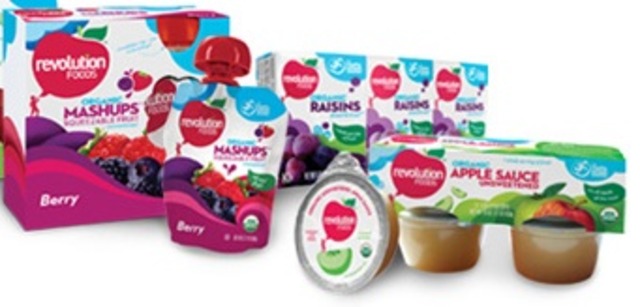
 Yesterday, City Paper’s Tim Carman spotted a story in the San Francisco Business Times about how Revolution Foods, a California-based group with the admirable mission that “all students should have access to healthy, fresh food on a daily basis,” may be expanding to D.C. in the next year. Revolution Foods has partnered with Whole Foods in the past, and places an emphasis on teaching kids good nutrition habits in addition to providing meals.
Carman is skeptical, writing, “if the Revolution is coming to D.C. public schools, that’s news to Dena Iverson, press secretary for DCPS. She says the District has a year-long contract with Chartwells School Dining Services, with four more one-year options.” Yet Revolution Foods frequently works with public charter schools, of which there are plenty in the District, so perhaps we shouldn’t rule out the possibility of better lunches for some local schools soon. (Or maybe the Obamas can just feed the kids arugula from the White House vegetable garden?)
What kids eat at school matters, not just in shaping their lifestyle habits and health, but for their learning, too. When I was a teacher, I could spot the kids in first period who had actually eaten breakfast (even if it was a bag of Hot Cheetos), or which ones had just noshed on candy from the vending machines at lunch – it showed in their behavior, and in their work.
The economics and politics for public school lunches are complicated, especially for urban systems like D.C., where a significant percentage of students depend on free or reduced price meals. The S.F. Business Times piece says that a typical Revolution meal “costs just $3 or $4, slightly more than a typical public school lunch,” but that’s something of an understatement – Chartwells only charges kids about $1.50.
It’s one thing for people like Alice Waters to say the system sucks (and it does), but fixing it will prove a messy business involving lots of stakeholders – parents, activists, politicians, food companies – all with their own opinions on what kids should eat and how to pay for it. (And while organic produce in the cafeteria is a lovely thought, you also need to get kids to eat it.)
For more on what’s currently being served in DCPS by Chartwells, check out DCist’s own Kriston Capps over at the Internet Food Association. Mixed-fruit cocktail, anyone?