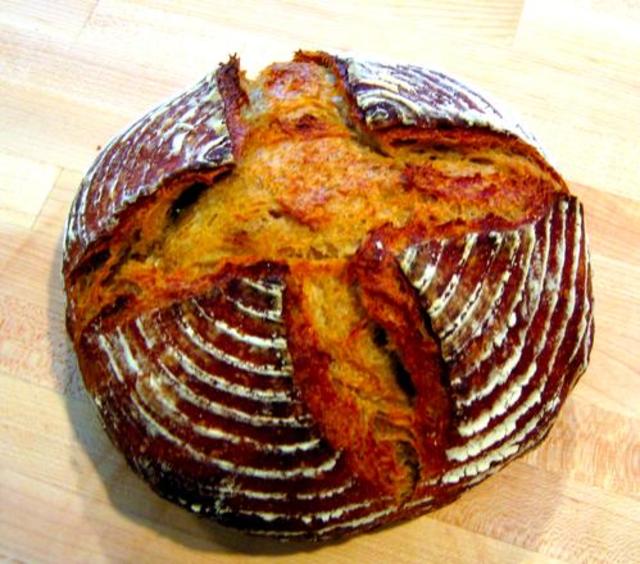
Bread has become a big topic recently. According to health codes, retail sales cannot be made from foods produced in a home kitchen unless that kitchen is on a farm. So it makes sense that there are covert home businesses, such as that of my friend, Joe (not his real name) who runs an underground artisanal bread baking business.
Joe received a diploma in the Art of International Bread Baking at the French Culinary Institute in New York. When he began graduate school (not in cooking), he decided to supplement his income with a secret bakery. I sat down with him to get some perspective on bread and the business. In a second installment, I’ll work with him to make croissants, which he notes is an easy thing to do well at home.
Your focus is on artisanal bread baking. What makes it artisanal?
I don’t really like to use the word artisanal but it is appropriate. Making bread is a craft and much more closely related to building furniture than to what a line cook does at a restaurant. Bread is a mass produced product, even at small scales. With furniture you can buy tables made from cheap materials produced mostly by machines or you can get ones made by individual people from fine materials. The same is true with bread.
The two most important components to making the kind of bread I like to eat are:
– TIME — complex flavors take time to develop because of the relationship between yeast, bacteria, enzymes, starch, temperature, and moisture — this is where EVERY bakery tries to cut corners to save money.
– Simple ingredients with no artificial additives — great bread needs only four things: flour, water, salt, and yeast (commercial or wild) and for some specialty breads you will add simple things like butter or dried fruit, but that’s all you need. Take a look at the ingredient list on your supermarket bag of “whole wheat” bread. There’s all kinds of things added to (1) make the bread faster and (2) appeal to the sugar-shocked palates of most Americans.
What is your procedure for taking orders and deliveries?
On weeks that I’m baking (I bake once a week, three weeks per month these days) I send out an email announcing what I’m making that week with brief descriptions of the breads (usually four types or croissants). People have until a given deadline to send me their orders. Bread is available first come first serve up to my baking capacity for that bread. I deliver within a limited area, basically making a circular route. Some people also pick up directly from me. My advertising is strictly word of mouth, so the delivery system is pretty efficient.