Any fan of the space program should recognize quite a few faces roaming around D.C. this week. Last night, the biggest gathering of Apollo astronauts in years arrived at the Smithsonian’s National Air & Space Museum for the annual John H. Glenn Lecture featuring the Apollo 11 crew, Neil Armstrong, Buzz Aldrin, and Michael Collins, along with NASA’s first Flight Director, Chris Kraft, and of course, astronaut and Senator John Glenn himself. The audience was filled with other Apollo astronauts, as well as the STS-125 crew that flew the space shuttle Atlantis to repair the Hubble Telescope in May.
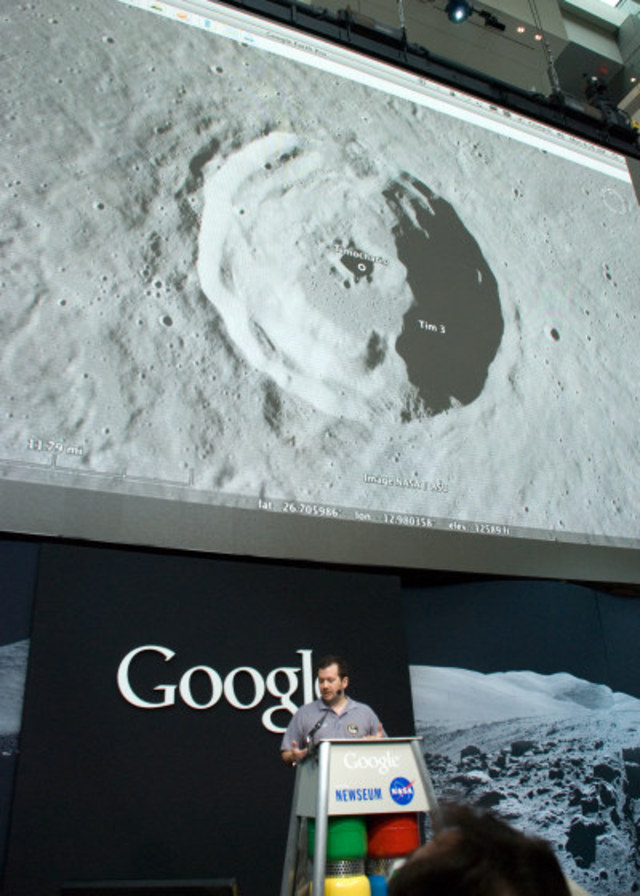
Today, as you may know, is the 40th anniversary of the day Neil Armstrong first stepped foot on the Moon. Google has been preparing a new venture to celebrate the mission, officially announcing Google Moon 5.0 this morning at the Newseum alongside Aldrin, brand new NASA Deputy Administrator Lori Garver, JAXA’s (the Japanese space program) Washington, D.C. Director Yoshinori Yoshimura, along with many of the Google team.
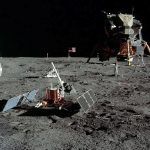
A downloadable program, Moon in Google Earth has nearly all of the same features as Google Earth, plus many more that it doesn’t. Although the programming venture began with existing photos of the Moon — many taken by the Apollo astronauts — it’s being updated constantly with new data from the Lunar Reconnaissance Orbiter, which launched June 18 and began sending up-close images back to Earth four days later. Google Moon will take you on 3D tours of every Apollo mission, including “street views” that feature stitched photos of the landscape, photos or animations of the artifacts both the U.S. and Russia left there, and “guided tours” that follow the astronaut’s paths. Additionally, archived video and audio footage is available, including some narration added by Buzz Aldrin specifically for the project.
The speakers on hand today at the Newseum, as well as the astronauts in yesterday’s Air & Space lecture, spent all their time talking about the future of space exploration, rather than re-living the achievements of the past (in fact, they’d all appreciate today’s Someecard tribute). Google bills their new platform as a next step in the space program, and hopes it will play host to a wealth of new discoveries via the “democratization of information,” the way that Google Earth has — citing its role in, among other things, finding damaged areas after Hurricane Katrina or tracking the 2007 San Diego wildfires.