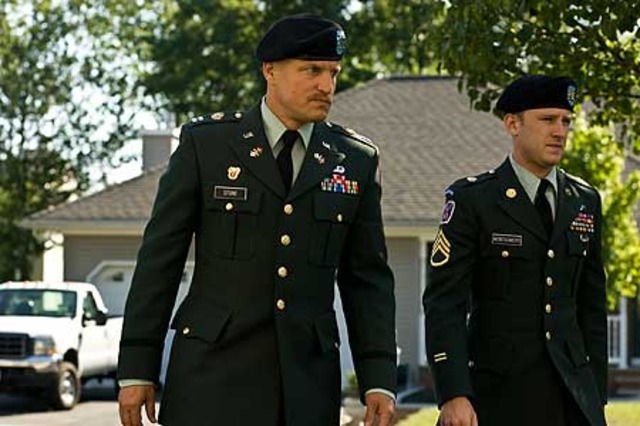
 The Messenger starts with loss, as Staff Sergeant Will Montgomery (Ben Foster) has one last bittersweet meeting with his girlfriend, who met another man while he was off to war. It’s a gentle way of ushering the audience into a movie that is all about loss on a larger scale. For soon after his return from the war, with injuries that nearly took away an eye and his ability to walk, Montgomery is assigned to the Army’s Casualty Notification service, bringing news of the deaths of soldiers in the field to their families back home.
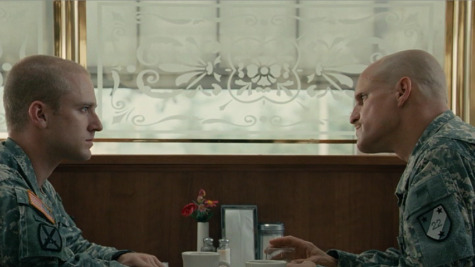
It’s an assignment no one wants, and why would they? Being the bearers of the worst possible news, these soldiers regularly witness the first, strongest rush of grief — and the devastated, sometimes violent, reactions that come with it. The danger of someone shooting the messenger isn’t just metaphorical here. It’s emotionally taxing work, and it’s no wonder that Montgomery’s partner, Captain Tony Stone (Woody Harrelson), a seasoned veteran of Casualty Notification, is a recovering alcoholic. How could you deliver that kind of news and witness that kind of pain and not need something to take the edge off?
Experienced screenwriter Oren Moverman (Jesus’ Son, I’m Not There) makes a confident debut in the director’s chair here. He wisely avoids any mention of politics or the legitimacy of the wars being fought. His soldiers don’t feel like mouthpieces for a writer’s anti-war agenda; they feel like soldiers. Stone looks at Montgomery with a degree of envy for the Staff Sergeant’s valor in battle; as a veteran of the first Gulf War, Stone didn’t see much action. These men are trained to be warriors, and want to put that training to the test.