The biggest celestial show always waits ’til last, so be sure to look up this week for the Geminids. Unlike last month’s Leonids, which were primarily seen over Asia (though folks around here who braved very late into the night may have seen a few), December’s meteor shower will be visible all over the Northern Hemisphere. You may be able to see a few starting tonight, increasing in frequency all week until they hit their peak next Sunday night/Monday morning. Not only will they be appearing in our part of the sky — originating from sky near the constellation Gemini, which rises in the East around 8 p.m. — but we’ll be helped by a nearly New Moon (no, not the one with the hair). The most visible ‘shooting stars’ should appear almost all night, from 10 p.m. to dawn, with the peak around 2 a.m. The Geminids are the most reliable meteor shower and should produce up to 100/hour at its max.
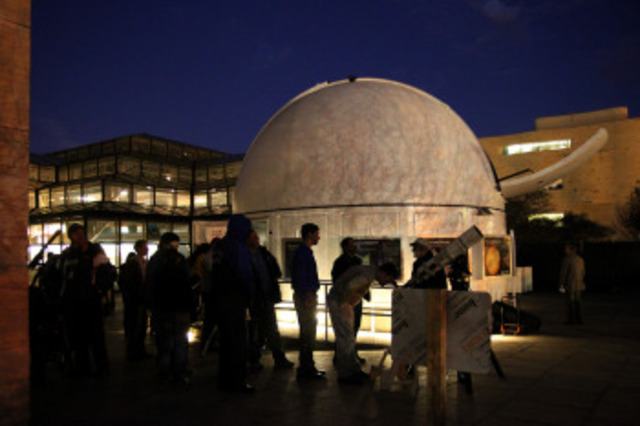
If you like a little apocalypse-style drama with your science, and who doesn’t, check out the trailer below for “Meteorwatch 2009,” a nice little riff on 2012 but with, you know, real events (I wish I could say I made it so YouTube stopped the video on “Look Up,” but that’s just an awesome coincidence). The Newbury Astronomical Society in England has been holding interactive events all year for the International Year of Astronomy. Earlier this summer they held a three day Moonwatch event, encouraging people all over the world to take to the sidewalks and look up at the sky, either to ask questions or share their knowledge with others. They’ve kept up with Moonwatch and previous meteor showers via their Twitter feed (search #moonwatch and #meteorwatch), immediately posting fantastic shots or retweeting photos that their followers captured, and this is in addition to their regular nightly updates from their amateur astronomers. It’s a great way to “watch” the shower if you’re not brave enough to stand out in the cold or, more likely, if it’s cloudy where you are.