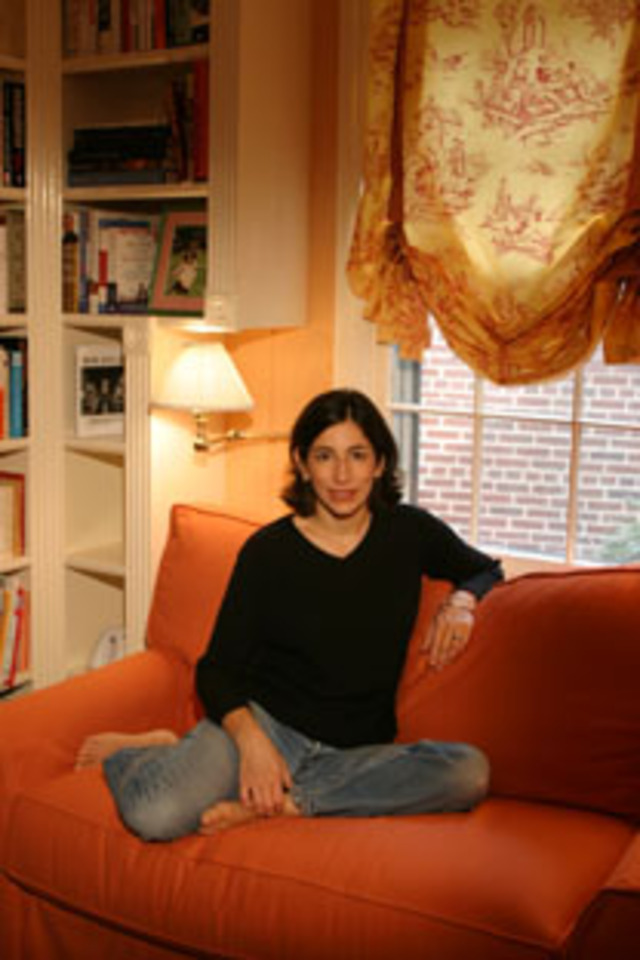
 Judith Warner. Photo credit: Jean-Louis Atlan
After almost four years, New York Times online columnist Judith Warner retired Domestic Disturbances, a blog inviting readers to weigh in on, among other things, the complexities and challenges of motherhood. Whereas her last book, 2005’s hotly debated Perfect Madness: A Motherhood in the Age of Anxiety, focused on the structural and societal barriers in achieving the maternal ideal, her new book, We’ve Got Issues: Children and Parents in the Age of Medication, examines the numerous biological realities and pervasive myths surrounding childhood psychiatric disorders.
In advance of her appearance at Politics & Prose this Saturday at 3:30 p.m., DCist spoke with Warner about the forthcoming updates to the DSM, misleading drug advertisements and the damage a certain Milos Foreman classic has had on the collective unconscious.
The preliminary draft revisions of the Diagnostic and Statistical Manual of Mental Disorders (DSM) V are now available online. One of the potential new changes is the addition of Post-Traumatic Stress Disorder as a diagnosis for children under 6 years old. Was this issue something you encountered when speaking with parents?
There was one parent whose child was being poorly handled by a psychiatrist. He had some real behavior issues and a lot of scary emotional stuff- very sexual things, suicide-very dark and inappropriate. He was acting physically threatening to other small children. The mother had taken him to a child psychiatrist who immediately diagnosed him with ADD. It was a snap judgment based on the way he played with a dog. It was ridiculous. The back-story being that his brother had definitely been sexual abused by a relative and it was conceivable that he too had been abused-it was never proven- or could have witnessed the brother’s sexual abuse, making PTSD appropriate.
On the one hand, as I mention in the book, I think that in our culture we still strongly have the idea that parents cause their children’s problems. With ADHD, depression or anxiety disorders, that is just a gross over simplification of why people have problems. PTSD is different, by definition it is a reaction to an event. You’d hate for those children’s voices or stories to get lost.