DCist’s highly subjective and hardly comprehensive guide to the most interesting movies playing around town in the coming week.
Elia Kazan: A Centennial Retrospective
It’s a shame that Elia Kazan did so much damage to his own reputation by remorselessly throwing his colleagues and friends to the wolves during the HUAC hearings in 1952. While love for his films has never waned as a result of his actions, there’s still a reluctance by some to discuss the artist in positive terms. It’s unfortunate, because few directors in the 20th century had quite the range and multiple talents he did. Not only a talented film director, Kazan also was an actor early in his career, a novelist, and made a huge mark as a director and producer in the theater. Perhaps most importantly, he was one of the founders of the Actor’s Studio, and his films are most notable for the stunning performances he was able to produce from the greatest new actors of the mid-century. No one did more to bring the naturalistic acting that the Studio taught — and that changed film acting permanently — to a wide audience than Kazan.
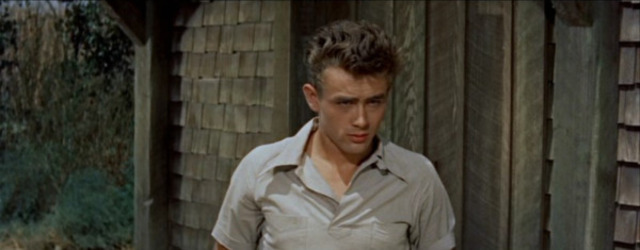
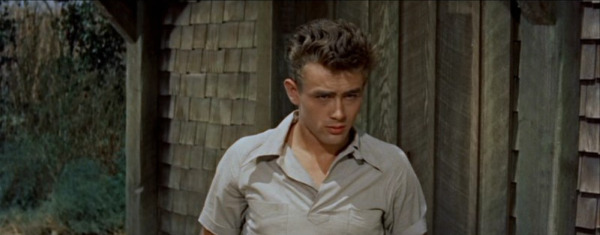
This spring the AFI is offering up a retrospective of most of his better known works, as well as a couple of more obscure titles, starting this weekend with a couple of giants in East of Eden and A Streetcar Named Desire. The films themselves are fantastic, but this is a great pairing for another reason: each represents the birth of a star, as they feature the first marquee roles for James Dean and Marlon Brando, respectively. In Eden, based on part of John Steinbeck’s novel, Dean is a young man battling his brother for the love of their stern father. Steinbeck reportedly felt Dean was the perfect embodiment of the character he’d written, and his performance here is probably the finest of the three starring roles he had before his death. Meanwhile, in Streetcar, Brando — a brash and buff 26-year-old force of nature — practically leaps off the screen as he reprises the role he created on Broadway (and that Kazan directed for the stage) just a few years before, as Stanley Kowalski in Tennessee Williams’ classic. After these two, the movies were never the same again; and while Dean and Brando are the bigger household names, Kazan’s part in their performances is vital.
View the trailers for East of Eden and Streetcar Named Desire.
Continues at the AFI until May 23.
—
Guy and Madeline on a Park Bench
One of the first artists to take the focus on performance in the work of Kazan and his acting protégés and take it in entirely new directions was John Cassavetes, who had an acting studio of his own in New York in the 1950s, and by the end of the decade was making some of the rawest, most free-wheeling cinema ever shot by an American director. A half-century later, a young Harvard student named Damien Chazelle has brought the jazz-inflected intimacy of early Cassavetes filmmaking back to life in his debut feature, which started as his thesis project, Guy and Madeline on a Park Bench. Chazelle fuses his love of music and his love of film together to create a love story about a guy and a girl and about himself and jazz. There are frequent homages to everyone from Cassavetes to Jean-Luc Godard to Busby Berkeley to Jacques Demy, and the film is saturated in music, much of it played by jazz trumpeter Jason Palmer in the lead role. Perhaps most impressive is the fact that Chazelle managed to make a throwback musical, complete with song and dance numbers, on a student budget and using whatever locations they could come by without permits. A talented filmmaker, using the most basic tools of filmmaking, sounds like a welcome anachronism amid studio maneuvering to get moviegoers to pay more and more for empty 3D digital extravaganzas.
View the trailer.
Tonight at 6:30 p.m. at the Smithsonian American History Museum. Free.