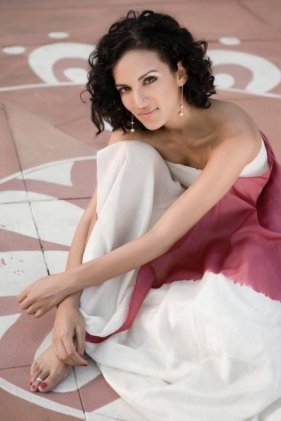
 Anoushka Shankar, photo by Anushka Nadia Menon
Steeped in North India’s Hindustani classical music from a very young age, sitarist Anoushka Shankar has always been respectful of its ancient roots, but also sees it as living music that is continuously growing and evolving. This outlook is no doubt in large part due to the influence of her father, Ravi Shankar. Arguably India’s most well-known musician, the elder Shankar brought Indian classical music to Western ears in the 50s and 60s, and was also among the first musicians to experiment with the fusion of Indian and Western music, a progression his daughter sees as only natural.
“A primary vision for me is to continuously reinterpret the Indian classical tradition,” Anoushka Shankar told DCist during a recent interview. “There’s perhaps a bit of barrier shifting or breaking in my music.”
Her vehicle for this exploration is the Anoushka Shankar Project, a rotating cast of musicians she assembled to help create a more experimental sound that departs from the strictly traditional music she performs when on tour with her father. The ensemble’s most recent iteration will appear on Saturday at the Sixth & I Historic Synagogue, as the last installment of the Washington Performing Arts Society‘s Sessions @ Sixth concert series. Sharing the stage will be Shankar’s longtime tabla player, Tanmoy Bose, flutist Ravichandra Kulur, and mridangam player Pirashanna Thevarajah.
“The truth is I’ve surprised myself with this ensemble,” said Shankar. “The music is so bright and so passionate.”