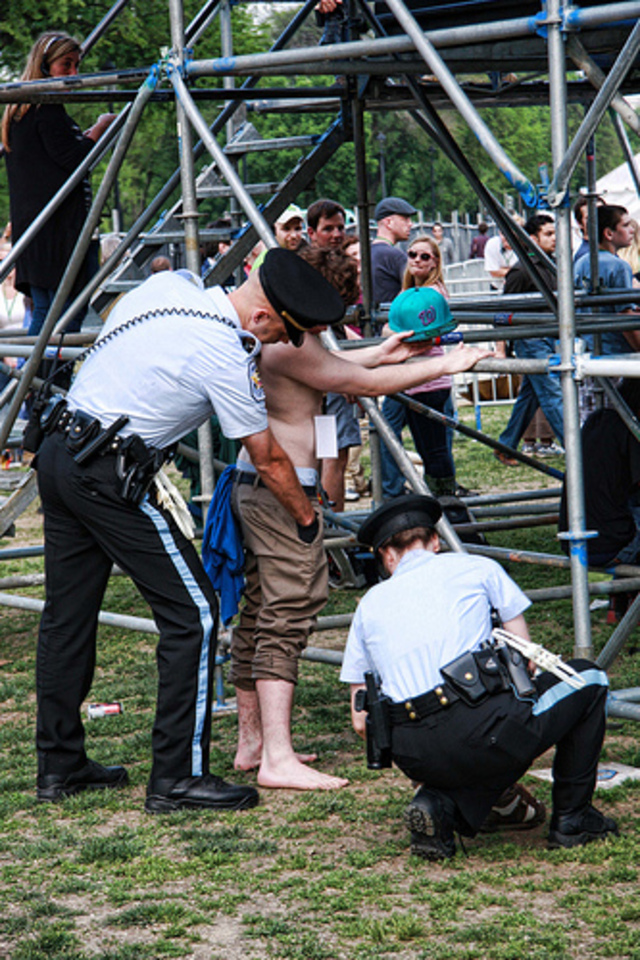
 Photo by SweetJen34.
Should police officers in the District of Columbia be able to stop and search people based on incredibly vague descriptions? The D.C. Court of Appeals says yes — the District’s highest court has upheld the conviction of Casey Hampleton, who was arrested in 2006 for robbing three people at gunpoint. Police stopped and searched Hampleton four years ago, based on a description that the robbery suspects they were looking for were “black males in dark clothing” — which led Hampleton to appeal his conviction:
Hampleton had appealed, arguing that the lookout could have applied to “large numbers of people” and therefore could not have been a reasonable basis for a police stop. That would have meant identifications made by officers summoned to the scene of the stop and some physical evidence were “the fruit of an illegal seizure,” he argued.
But the appeals court recently ruled that the “totality of the circumstances” meant Officer Lennox Antoine was justified when he stopped Hampleton on the 3700 block of North Capitol Street.
[…]
The appeals court noted that the lookout description was “admittedly vague” but said “Mr. Hampleton was the only one in the immediate area who fit the lookout description” and was “the only person in the area that Officer Antoine saw at all.”
The specifics of this case may have proved the police and Antoine right. But in digesting the court’s decision here, there’s more gray matter to be found than between Stephen Hawking’s ears. Vague descriptions are hardly a rarity in criminal cases — often times, people who commit crimes are often described as such: “black hair, and wearing a grey hooded sweatshirt and dark pants,” for but one example. In a city where mass police searches have been a very touchy subject in recent years and have even led to high-profile legal settlements, is it wise for the courts be setting this precedent?