 Yesterday, the Washington City Paper filed an affidavit requesting the dismissal of Dan Snyder’s lawsuit against the newspaper and reporter Dave McKenna under a new D.C. law which prohibits “strategic lawsuits against public participation,” or SLAPP.
Of course, Snyder is suing the paper and McKenna over the reporter’s “The Cranky Redskins Fan’s Guide to Dan Snyder” — a lawsuit which has been roundly criticized as baseless, not least for the fact that Snyder and his Public Relations manager, Tony Wyllie, have all but admitted that the suit is a SLAPP, legal actions “intended to censor, intimidate and silence critics by burdening them with the cost of a legal defense until they abandon their criticism or opposition.” The plaintiffs are on record as stating that City Paper “defending such litigation would not be a rational strategy” and that “the cost of litigation would presumably quickly outstrip the value of the Washington City Paper”; Wyllie has said that the suit serves as “a warning shot” to other media. Yup, that’s pretty much the textbook definition of a SLAPP.
Snyder’s biggest mistake — though defining that over the course of this legal action is kind of a laughable exercise — was moving the suit from New York to the District, where there is a law on the books preventing Snyder and friends from doing what they’re doing. (Rep. Steve Cohen (D-TN), inspired by Snyder, is drafting a nationwide anti-SLAPP law.) The anti-SLAPP legislation, passed by the District last year, allows the City Paper to make this compelling argument (warning: lawyer-speak ahead):
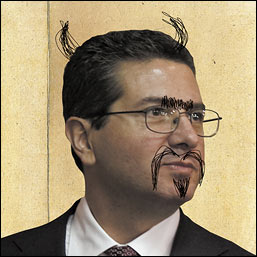
Not only has [Snyder] publicly acknowledged the improper purposes that in fact undergird this litigation, but his ever-shifting explication of why the Commentary is allegedly actionable in defamation further reveals his lawsuit for what it is—a pretext for punishing and silencing his critics. As demonstrated in the materials accompanying this motion, Mr. Snyder has moved from complaining publicly about statements that, on inspection, appear nowhere in the Commentary; to suing over artwork that any first-year law student knows is not the proper basis for a defamation action; to his current Complaint, which wrenches out of context substantially accurate accounts of his prior conduct, themselves drawn from the voluminous archives of public records and previously published press accounts that document his public life, and ascribes to them allegedly defamatory meanings that no reasonable reader would credit. Simply put, Mr. Snyder cannot demonstrate that it is even arguable he can succeed on the merits of his current claims, much less that he is, as the Anti-SLAPP Act requires, likely to do so.
Put another way: if a judge agrees with the City Paper, Snyder will have to prove to the court that he can win the case before the case even begins, which sounds like it’ll be pretty difficult.
It’s also only fitting that the City Paper’s massive filing contains an astounding amount of material that serves to back up what was originally written in McKenna’s article, most of which will only serve to embarrass Snyder further: former DCist contributor Jason Linkins, who’s been following the case for the Huffington Post, aptly dubbed the City Paper affidavit as “a super-enhanced version of [McKenna’s] original [story] — with deleted scenes and extensions.”
Hey, that’s karma, man.