Martin Austermuhle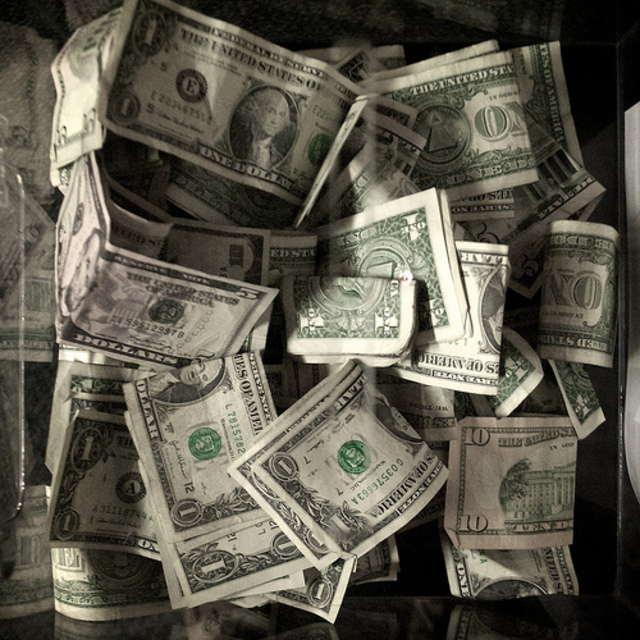
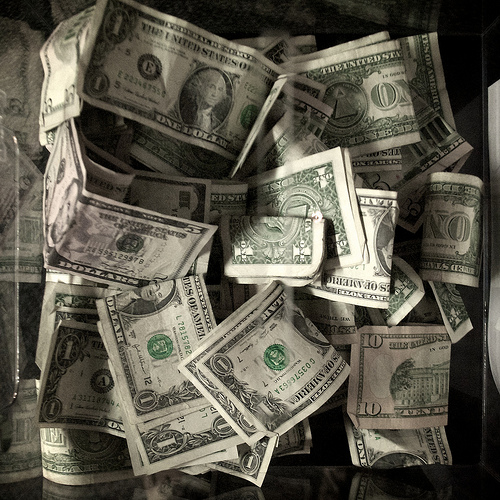 Photo by elliotmitchell.
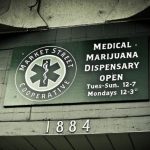
Drug liberalization advocates have always argued that the government could make more money by regulating and taxing marijuana than it spends pursuing, prosecuting and imprisoning those who use it. Looking at the District’s nascent medical marijuana program, it’s clear that they’re right — and cash-conscious city officials are likely to be very happy.
From May to June, over 80 individuals or groups sent in letters of intent to the Department of Health expressing their interest in applying for licenses to run some of the District’s planned five dispensaries and 10 cultivation centers. All told, the possible applicants — who can run only one dispensary but multiple cultivation centers, or a combination of the two — gave notice that they were planning on filing close to 170 applications for the 15 available licenses.
This is where the money comes in. Each license carries with it a hefty application fee — $5,000. (By comparison, a liquor license application runs $75.) If each and every applicant applied for each and every license they claimed they would, the city would take in close to $850,000 in application fees alone. And according to a new set of rules rolled out in April, applications that are rejected or withdrawn forfeit half of the application fee, leaving the city with almost $500,000 in revenue after the $2,500 is returned to all those who do not eventually get their hands on a license.
Once the licenses are doled out, the city stands to collect $5,000 in annual registration fees for each cultivation center and $10,000 in fees for each dispensary. That’s a cool $100,000. (Again, comparing to the liquor industry, you could run a nightclub that fits 1,000 people at a time for $5,850 in annual fees.) This doesn’t even include fees for registering employees — $200 annually for a director, $150 for a manager and $75 for an employee.
That’s some good spare change to have in a city facing tough fiscal times, and it far exceeds official expectations. In a financial estimate produced in March 2010, District CFO Natwar Gandhi assumed that, over a four-year period, the city would only take in $606,500 in total revenue — $65,000 of which would come in the form of application fees. With the current crop of potential applicants and the number of licenses they are vying for, the District appears set to take in a whole lot more than that, all while keeping the costs of administering the program somewhat low. (The same estimate pegged annual costs at $140,000, most of it split between hiring an administrative officer and an inspector.)
Of course, not all of the people who said they’d like to apply actually will. First, there’s the uncertainty as to where the program stands with regards to federal law. Second, the start-up capital needed to get a dispensary or cultivation off the ground may well push some contenders out of the running. Those fees certainly add up, as would the costs for the strict security required. Third, with a 95-plant limit in each cultivation center, profit margins for those looking to make money will be slim.
It’s probably worth arguing whether extracting so much money from individuals that would be providing marijuana to patients with severe medical conditions is really fair. After all, any of these budding entrepreneurs could probably open themselves a nightclub for less money. Then again, some states, like Arizona, charge similar application fees, while others, like Colorado, charge more depending on the number of people served.
Either way, the District’s budget crunchers are sure to be happy that they could be getting a few extra dollars out of the medical marijuana program, if and when it becomes operational.