 Photo used under a Creative Commons license.
by DCist contributor Leah Caldwell
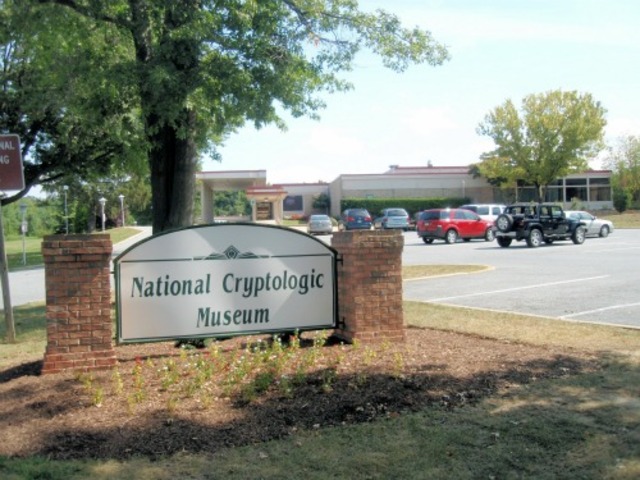
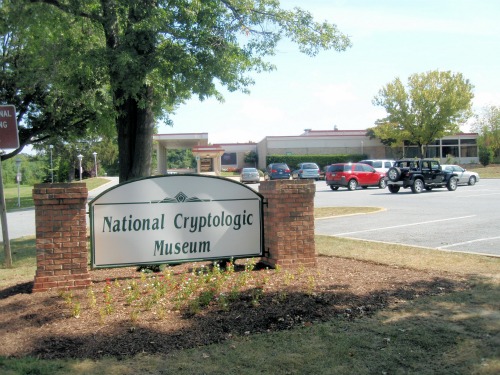
Located in Ft. Meade, a few blocks from the curtain-walled NSA headquarters, the National Cryptologic Museum is housed in a former Colony 7 Motor Inn that dates back to the 1960s. The motel was a bit too close for comfort for the NSA, so the agency bought it in 1987 and turned it into a museum in 1993. Now, instead of dinner theatre, the old motel hosts a kitschy array of exhibits on cryptology that serve as the national intelligence community’s only public museum.
If it weren’t for the information placards next to the exhibits, you might mistake the museum as a dumping ground for all the NSA’s defunct technology. A collection of secure telephones from the 1990s and “Frostburg,” the first massively parallel processing supercomputer ever purchased by the NSA, sit amongst other technological artifacts that, despite their use only a decade ago, have already become obsolete. It’s not difficult to imagine the day when laptops and smart phones will gather dust on the museum’s shelves, acting as quaint relics of a surpassed technological era.
Lest you be deterred by scenes of a computer wasteland, the museum also features a display of Depression-era hobo symbols used to communicate while train-hopping, as well as a KMZ 750 — the Ukrainian-built motorcycle used by the North Vietnamese military brass during the Vietnam War. I was strangely drawn to the display that detailed organized crime’s connection to the development of tamper-resistant packaging.
While the aesthetic of some exhibit arrangements may be reminiscent of a high school science fair, it’s free-of-charge and possibly the closest us folk without security clearances can get to the NSA’s fenced-in parking lot without drawing suspicious glances. Touring the CIA museum, on the other hand, is only possibly online since its exhibits — although declassified — are located on Agency property.