Martin Austermuhle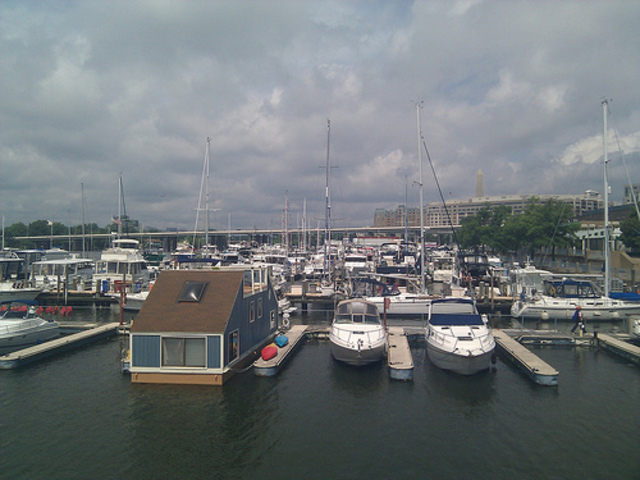
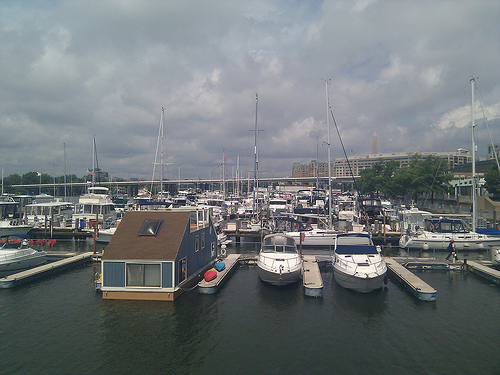 The Gangplank Marina in Southwest is home to 120 residents. Photo by GPSA.
Depending on who you ask, being on a boat may be the best or worst idea during the type of tropical storm we’re about to get hit with. But for the 120 residents of the Gangplank Marina in Southwest, it really isn’t a choice — it’s simply where they live.
Jason Kopp, who lives on Argo in slip F-6 and is the president of the Gangplank Slipholders Association, living on a boat certainly requires a different level of preparation for a storm like the one that’s slated to hit this weekend. Beyond the list of things the marina has told all house-boaters to prepare for, there’s a number of considerations that we land-dwellers are likely unconcerned with.
“Since our homes move with the water, we need extra protection from high winds. Most boaters will double the lines that they use to tie to the dock. This helps decrease the likelihood of a boat breaking away from the dock due to high winds. In addition, we’ll add extra chafe protection for the lines (which will be under much greater pressure than usual) and additional fenders to help keep the boat from bumping into finger piers,” he told DCist.
According to the marina’s severe weather preparedness plan (slip-owners have to submit their own plans as part of their annual leases), this isn’t a concern taken lightly — during 2003’s Hurricane Isabel, sustained 40-mile-per-hour winds caused two boats to break free, threatening other boats and the docks. According to the plan, “the actors involved broke the most basic principles governing best management practices when the hurricane was upon the marina. Such drama has no place in hurricane management.”
Kopp also noted that much like on land, anything that isn’t tied down should be or, better yet, just moved inside.
“We also need to remove any furniture, plants, or other loose objects from our boat decks and take any tenders (dinghies, kayaks, canoes, etc) out of the water to keep them from breaking loose and damaging other boats,” he said. “Because the winds will likely knock us around a bit, most boaters will take down pictures, lay flat televisions, and secure any other loose objects inside the boat. No one wants a bottle of Shiraz rolling all over the galley in the middle of a hurricane!”
Kopp, who has lived on a boat since late 2007, but never experienced this type of weather, points out that being on a boat this weekend has both fringe benefits and particular challenges. As for the former, well, he’s not likely to experience any flooding.
“Since our docks float, we should be able to handle a fairly significant rise in water levels without sustaining significant damage. This is certainly one positive aspect of living on a boat. However, during Isabel, several slip holders reported damage to cars left in the marina parking lot, which ended up flooding. So those with cars will likely move them to higher ground if flooding appears likely,” he said.
And the challenges?
“If you are not used to living on a boat, movement from the high winds will probably be the biggest challenge this weekend. Our boats can really get rocking with sustained winds above 30 mph, and not everyone can easily adjust to the additional movement.”
Of course, all of these preparations tame in comparison to what would happen if a category 2 or stronger hurricane were headed straight for the District — the boats would have to be moved out of the water altogether.