Martin Austermuhle
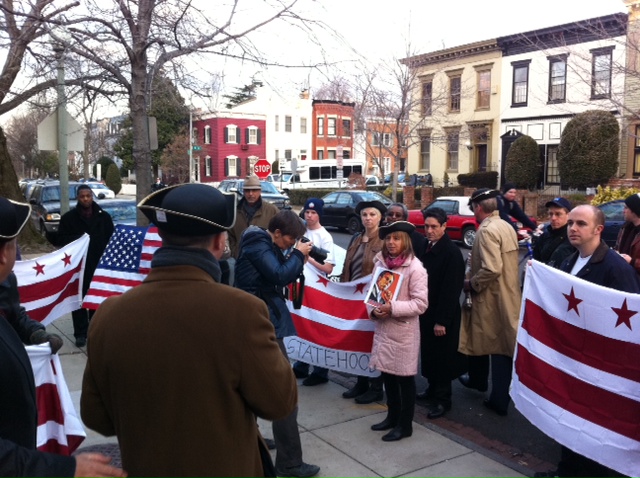 D.C. voting rights protesters in front of Speaker John Boehner’s house in February.
Today the Post brings up an issue that we’ve discussed plenty of times around these parts: where is it OK to protest, and where is it not?
Last week, a group of anti-abortions activists in Maryland pushed the issue, targeting the school attended by the landlord of a Germantown space used by an abortion provider. The group demonstrated outside Robert Frost Middle School in Rockville last Thursday — back to school night, no less — specifically targeting the sixth-grade daughter of the landlord that rents to LeRoy Carhart, who has been performing abortions in the office space since December.
The strategy certainly isn’t new, nor is it used by conservatives alone. Earlier this year anti-Walmart activists protested outside the Woodley Park home of one of the developers; in February, D.C. voting rights activists roused Speaker of the House John Boehner at his Capitol Hill apartment. In 2005, one Capitol Hill resident outed a neighbor who worked for a firm that lobbied on Sudan’s behalf.
In a related move, late last year the D.C. Council passed legislation that would make protesting in front of someone’s house while wearing a mask an arrestable offense.
The protesters insist that they haven’t been able to force the landlord to reconsider his choice seeing as the clinic is in a privately-owned office park. Additionally, their protest at the school is seemingly legal — they didn’t cross on to school property — if somewhat tasteless.
Regardless, their move again begs the question — where is protesting OK, and where should it be off limits? Does the seeming immediacy or importance of certain issues allow protesters to cross that invisible line between someone’s professional choices and their personal life?