Martin Austermuhle
Want credit card payment options? Environmentally friendly cabs? A cab driver that can tell you about the city’s historic sites? These are all parts of an eight-point improvement plan for the District’s taxicabs laid out by Mayor Vince Gray, but they won’t be free.
During a D.C. Council committee hearing yesterday, D.C. Taxicab Commission Chairman Ron Linton referenced the plan for improving the city’s 8,000 or so cabs, which other witnesses complained lacked basic modern amenities and easily enforceable standards.
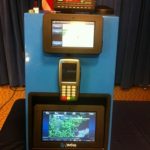
Under Gray’s plan, taxicabs would have an Internet passenger display system that would allow for payments via credit card and hotel bills, and give passengers the chance to “read their meter charges, send emails or watch television news.” Moreover, D.C.-based cab companies and drivers would be given incentives to convert to fuel-efficient vehicles, the city would provide education for drivers to teach them about the city’s historical sites and improve their English, a unified color and marking scheme would be established, and enforcement of illegal taxicabs would be stepped up.
All of these improvements cost money, though, and Gray’s plan would impose a surcharge on each taxi trip that could raise up to $2 million a year. The surcharge would be tacked on top of a likely increase in fares and any surcharge imposed when gas prices are high. (The last gas surcharge went into effect in July and will last through November.)
According to the Examiner, the idea of the surcharge, which would have to be approved by the D.C. Council, has met with some skepticism. It’s not hard to see why — yesterday, Linton complained that the commission was 50 years behind the curve in handling information, and said that he couldn’t even really give a definitive count on the number of taxicabs and drivers in the District.
During the hearing, representatives of D.C. hotels complained about the District’s taxicabs, saying that the city needed a system that reflected the importance of tourism — which brings roughly $1.9 billion a year through the District — to the local economy.