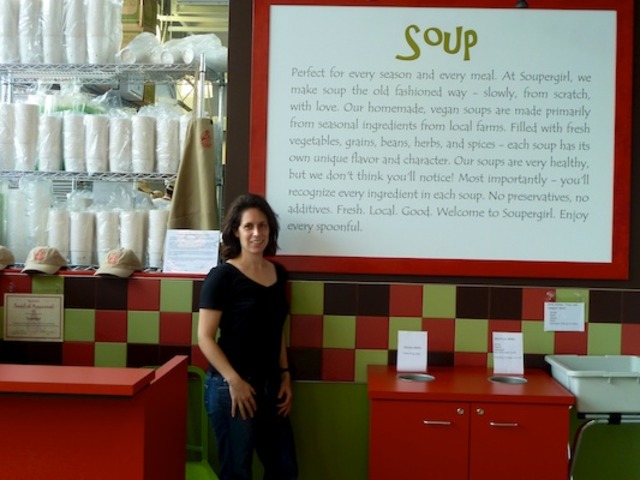
About three weeks ago, D.C. native Sara Polon opened the first retail outlet for her three-year old soup company, Soupergirl, in Takoma Park just steps away from the metro. The bright, industrial space is clean, airy, and filled with nods to the social conscience that drives every aspect of the business.
The sleek green chairs at the small wood tables are Emeco 111 Navy Chairs, made from recycled Coke bottles. The neatly stacked rows of takeout containers and lids for hot soups are compostable. And the floor-to-ceiling windows that make the space so bright are also functional, letting the store rely almost exclusively on natural light during the day to avoid using more energy than is necessary. In short, it’s a space designed to fit a company that produces locally sourced vegan soups perfectly.
DCist sat down with Polon at the new space to talk soup, stores and socially responsible eating.
So, why soup?
My mom kind of raised us on soup. Even when I lived in New York and my folks would come up every few months to visit. She would bring a cooler of soup. I don’t know what other people eat. Soup to me is the most logical and healthy thing to eat and it’s a great way to incorporate vegetables, grains, fiber, protein and everything else in your diet. And you can have so much fun with it.
You do have a broad spectrum. How often do you change the menu?
Every day or two, we’re putting a new soup out and when one runs out we just put out the next, cycling through them.
In terms of selecting the recipes you’re make, how does that process work? Are these all family recipes?
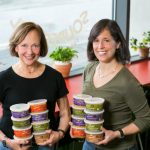
My mom created all of them. She’s tested hundreds of recipes and just scours cookbooks and websites and then collects different recipes and combines and tinkers. The summer before we opened, she cooked every day and we would have these parlor meetings in my apartment and my friends would come and test the soups. From that, we developed this initial database of soups. So all summer long we were just testing and testing and testing and she was cooking and cooking and cooking.
Was there ever an inkling before you started this business or a moment where you were like, “hmm, food and cooking might be something I want to do with my life”? Before you were in New York and you were working as a stand-up comedian…
No, there wasn’t an inkling. I read The Ominvore’s Dilemma and it was so important to me to get involved in the local food movement. I was tossing around ideas like maybe I would apprentice on a farm and then I thought maybe we should do something with the food business…and I was brainstorming with friends and they said, “your mom makes so much soup, why don’t you do that?” And then I was just kind of like, “of course.” The spark was local food; it wasn’t food in general.
So you opened the store here three weeks ago and who, would you say, are your customers? Do you get more of a lunch crowd or are you a dinner on the way home kind of spot?
Well, our online business is growing tremendously…and this [space] is a hub for that. Here, on-site, lunch is great and we do get this burst of people because there aren’t a ton of lunch places around here. At dinner it’s a mix, there are definitely some people that sit down and we have a ton of people that grab and go to take home. And we love that. It’s prepackaged, it’s ready to go, or we have a take-out option with hot soup if you’re going to be home soon and don’t want to worry with heating it up. We’re trying to hit everybody’s needs. We’re thinking about getting a beer and wine license, not a full liquor license — we’re not a bar, but something so people can come in and grab a beer, maybe stay a little bit later. We’d like to become a community gathering place.
Takoma seems to be an area that has a lot of social consciousness on the part of residents and businesses. There are a lot of green businesses in the neighborhood and the residents have been very supportive of that. Is that part of why you chose Takoma?
No. We weren’t looking to go retail; the landlord found us and thought we’d be a good match. We were just looking to build an industrial kitchen space to expand our online business. We’ve been in business for three years delivering to homes and offices. He found us and kind of convinced us to go retail. The neighborhood I knew about, but I didn’t know that much. Now I’m here more than I’m at home and it’s just wonderful…we feel really at home here.
So when you read The Omnivore’s Dilemma is that when you became a vegan or is that a decision you’d already made?
No, that was back in New York. I’m actually a vegetarian; I’m not a vegan. I consider myself a “responsible eating” vegetarian. I occasionally have some local dairy from Firefly Farms or something like that, but I became a vegetarian back in New York in like 2002.
So what was behind the decision to make the business vegan?
We didn’t even realize we were vegan. We knew we were going to be vegetarian because my mom and I are both vegetarians — well, my mom is practically a vegetarian. So we knew already we were doing that. Then we really wanted to be focused on health and global responsibility. So, in terms of corporate responsibility all the containers are compostable, we compost everything, we recycle, and we produce almost no trash here. For health, we decided no cream and no butter…we didn’t even make a decision and then we started getting this vegan following and we were like, “Oh my gosh, we’re vegan.” So then we went through the recipes and removed all the honey, we were barely using any honey, and we switched in agave and then we just made a commitment to stay vegan.
There’s been a lot more attention recently to the vegan lifestyle and as more cookbooks come out that promote the “30 Minute Meals” style of vegan cooking there’s been a lot of tension between healthy vegan options and some of the more processed vegan foods. I’m assuming you don’t use any processed soy products or manufactured proteins?
You won’t find any soy or any tofu even in our soups. We’re not trying to fake meat. Half of our customers don’t even know we’re vegan or they don’t care. They know it’s good food and that it’s healthy food. We’re extremely low on salt. That’s why there’s salt shakers on the tables. I know that people sometimes add salt and no one seems to mind because better to have to add it. Once it’s in, you can’t really take it out. The only fat comes from the olive oil or canola oil we cook our mirepoix in or maybe some homemade peanut butter or organic coconut milk, but nothing processed. We really stand by that.
I know a lot more restaurants say they’re doing local — how do you feel about that? There seems to be a pretty broad range in D.C.
It’s weird. Local is in. I think it’s great that it’s becoming the norm and that people expect it but it’s very weird because what I see in D.C. On the one hand, you see this huge focus on health and on local and sustainable and then you have Shake Shack and BGR and Five Guys opening up everywhere. And there’s this focus on healthy eating and local eating and then there’s this — I don’t want to call it a backlash. But people also want to indulge and maybe it’s that people need comfort food — times are tough right now. I think I know what’s going to win. I think local and healthy is where the country, and definitely this region, is going but people definitely like to treat themselves. I mean, Shake Shack is jammed.
But I think you touched on what’s been one of the biggest criticisms of the local, healthy food movement and you have everyone from people locally to national voices like Anthony Bourdain saying, “All you local, seasonal people are a bunch of rich people who can afford to do this, but it’s not something everyone else can access.” How do you feel about those criticisms?
It’s hard. I mean, there’s a woman I know and I can’t remember the name of her organization, but she’s bringing farmers’ markets into lower income communities, and they all accept food stamps and double dollar programs. So, it needs to start somewhere. You know, it’s spreading to school systems and that’s not for the rich…You have the Baltimore City system that’s committed to getting like 70% of their food locally. Is that for the rich? No. It’s because the right people focus on it and then let it spread.
How do you feel that a vegetarian diet fits into this? Because it seems that any of the places in D.C. that are trying to do local with meat or seafood end up charging you $28 for a roasted chicken breast and some potatoes. Do you think you have a unique spot in making local more affordable?
I think so. I mean, on the one hand, our food costs are higher — buying locally is expensive. We had to really quickly change our menu after Hurricane Irene.
Sure, it killed pretty much all of the end of season tomato crops.
And zucchini: gone. And it was supposed to be around til the first frost. So we had our schedule set for weeks still featuring those things and that was all gone. When I did still have some [tomatoes] on the menu, the farmers were charging me an insane amount of money for their last remaining tomatoes. But on the whole, if we were making meatball soup with local, organic meat then I would need to charge $20 a quart and that’s really not affordable. But we’re talking about vegetables and beans and grains. I’m not saying we’re cheap, but we’re affordable. You’re getting fresh local produce here. What we like to say is that people want to eat healthily and they want to eat locally but they don’t have the time. And vegetarianism is on the rise. More people are doing this and celebrities are doing this and I don’t think this is a trend.
What’s your take, speaking of celebrities, on the involvement of the White House and specifically the First Lady? Because she gets criticized a lot from both sides. The industry hates her for rejecting their products and a lot of vegetarian, vegan, and local/sustainable advocates criticize her for not going far enough.
You do what you can, we’re all human. You have to enjoy life and treat yourself. I think what she’s doing is incredible. She has people talking about eating and health. We have an epidemic with obesity and diabetes. What she’s doing is amazing and if she goes out for a burger once in a while, enjoy your burger. We don’t all need to be purists, but if you spread the word and everybody gets on the same page I’m not going to judge anyone for having a burger. You do what you got to do.