Martin Austermuhle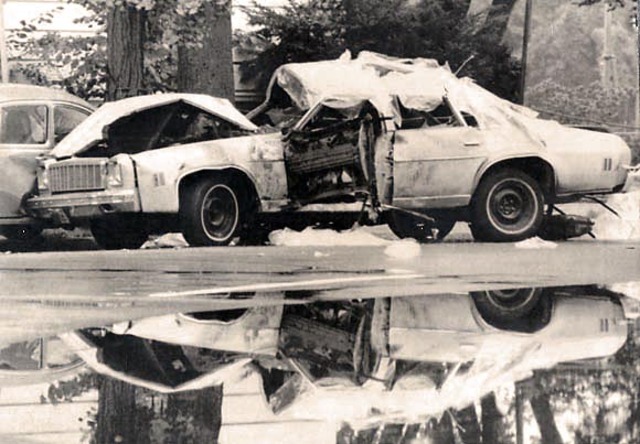
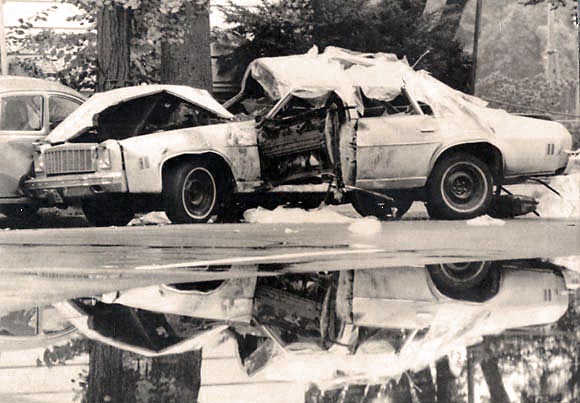 In 1976, former Chilean diplomat Orlando Letelier was killed by a car bomb in Sheridan Circle.
The news that the FBI had broken up what was an alleged assassination attempt on the Saudi ambassador to the U.S. was a big story, not only because of the links to Iran, but also because had it happened (a restaurant was the target location; some assume Cafe Milano), it would have marked one of the few times in history that a foreign diplomat was killed while serving in Washington. In fact, from as much as we’ve been able to find, it would likely represent the first time a foreign ambassador was killed while serving in the city. (Calls to the State Department’s Bureau of Diplomatic Security requesting further information were sadly not returned.)
There have been isolated cases of violence against diplomats and embassy personnel, though, most related to international grievances or conflicts. Diplomats certainly haven’t escaped common crimes, either — in 2010, for example, Colombia’s ambassador had her residence burglarized.
Joe Alon, Israel: In the early hours of July 1, 1973, Col. Yosef (Joe) Alon, then the air attache at the Israeli Embassy, was shot and killed outside his home in Bethesda. The mystery remains unsolved to this day, but in a twist worthy of the Cold War that was occurring at the time, it was eventually revealed that Alon was an intelligence agent with the Mossad. Fred Burton, a former State Department official who wrote a book about the killing earlier this year, believes that Alon was killed by Black September, a front organization of the Palestine Liberation Organization.
British Embassy: On August 27, 1973, a secretary at the British Embassy was injured when a letter bomb exploded in her hands. The Irish Republican Army took responsibility for the attack.
Orlando Letelier, Chile: In September 1976, a car bomb killed Letelier, a former Chilean diplomat, and his U.S.-born assistant, Ronni Moffitt, in Sheridan Circle. Letelier had been a politician and diplomat under socialist President Salvador Allende, but fled to the U.S. after the bloody 1973 overthrow of Allende’s government by Augusto Pinochet. Letelier and Moffitt died at the hands of Chile’s notorious secret police and with, some say, the acquiescence of then-Secretary of State Henry Kissinger. A memorial for the two was erected on the southern side of the circle.
Turkish Diplomats: According to the Assembly of Turkish American Associations, Turkish diplomats have been the victims of up to 27 attacks worldwide by Armenian terrorists. Five of those have been in the U.S., three in California alone — one in 1973, and two in 1982. Despite the fact that none took place in Washington, to this day the Turkish ambassador’s residence off of Sheridan Circle enjoys round-the-clock protection from the Secret Service.
Vladimir Sindjelic, Yugoslavia: In the early morning hours of June 3, 1980, a bomb went off in the flower box of the Crestwood home occupied by Yugoslavia’s charge d’affaires, Vladimir Sindjelic. Though Sindjelic wasn’t injured, the bombing was an audacious attack on the embassy’s most senior official at the time by Croatian activists upset with a planned trip to Yugoslavia by President Jimmy Carter. (The Yugoslavian Embassy had similarly been attacked in 1967 by Croatian extremists.)
Other: Over the last 40 years, a number of embassies in Washington have been targeted. In 1970, the Portuguese Embassy was bombed by the Revolutionary Action Party, a group that opposed American support for South Africa’s apartheid regime. In 1971, the Jewish Defense League set fire to three cars owned by the Soviet Embassy, while in 1975, anti-Castro extremists attacked the Costa Rican Embassy. In 1981, a man was shot and wounded during the occupation of the Iranian Embassy by anti-Khomeini forces, and the Black Brigades claimed responsibility for setting a fire at the Liberian Embassy. In 1983, the Embassy of the Philippines was firebombed.