Martin Austermuhle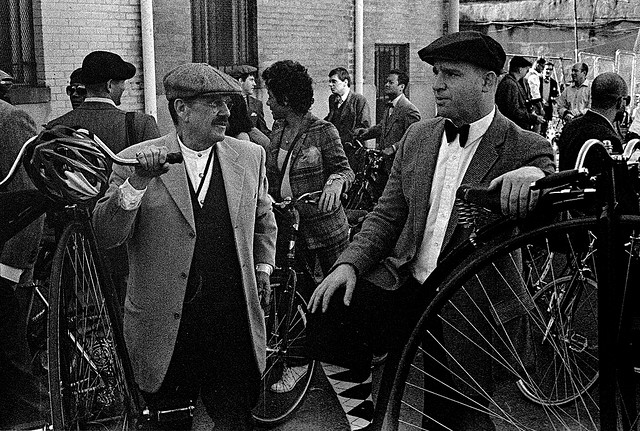
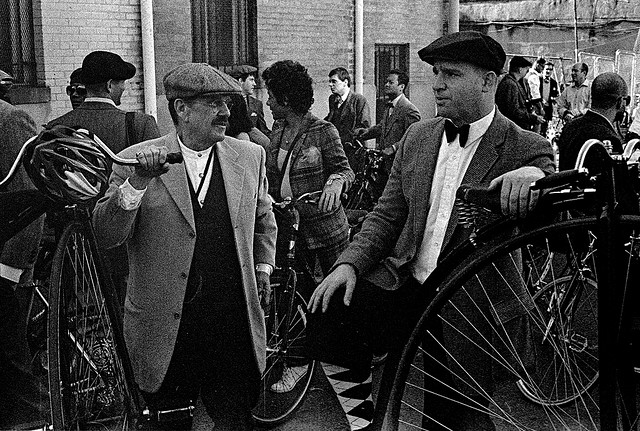 Photo by Bsivad
While recently doing some research for a post on the killing of diplomats in Washington, I came across a hugely helpful online historic archive of Washington Post articles dating back to the late 1800s. The history nerd in me came out in full force, and next thing I knew I was searching for names, neighborhoods and events over the course of the last 150 years.
Just for curiosity’s sake, I typed in “cycling” to see what emerged. What I found was a series of articles from the last decade of the 1800s touting Washington as something of a mecca for cycling. Everyone talks about how big cycling is these days, but little did I know that our fair city was considered “A Bicyclers’ Paradise” in 1888:
Washington to-day stands ahead of the world in cycling matters. At least 4,000 people here ride wheels. Never, in the history of the sport has there been such a vast wave of popular indorsement and encouragement in the development of wheeling as is now certain to centre in this city during the coming fall.
Even better, women were getting into the action in droves, or so reported the newspaper.
A short time ago the sight of a lady gliding along one of our smooth pavements on a bicycle was regarded as as an innovation. Now, however it is not even a novelty, and the time will soon come when the more prejudiced observers will consider it neither unusual nor objectionable. Incredible as it may seem, there are at least 150 lady bicyclists in Washington at present…The physical benefits and absolute freedom from annoyance will be a great boon to the fair sex.
Of course, the rise of bicycles at the time begged the question: What the heck happened with the tricycle?
In answer, it is only necessary to say that its great weight and the resoluting fatigue produced by its locomotion, combined with the fact that its width renders it unsuitable for storage in our Washington houses, have practically put an end to its use here.
An article from 1896 reported that there were some 40,000 bicycles in use in the District. But more relevantly, the Post informed, that many bikes would be worth at least $2 million, weigh 1 million pounds and, if organized in a straight line, reach over 100 miles. With that many bicycles, one would expect a lot of theft right? Nope — the Post wrote that in April of that year, only eight bicycles were stolen. (They were unlocked, proving that some lessons are timeless.) Still, police seemed to think that thieves should be dealt with more harshly:
The bicycle thieves, in the opinion of the police, should be dealt with as severely as a horse thief, because a standard machine costs about as much as the average horse, and is as valuable to the owner. Two or three months in jail does not have the effect that a few years in the penitentiary would have.
So, beyond the fact that cars weren’t yet around, why was cycling so popular in the District at the time?
[T]here is not a more tempting field in the United States. The streets are the best, and, in addition to the smoothness, they are extremely wide, making it less hazardous for the beginners than in other cities.