Martin Austermuhle
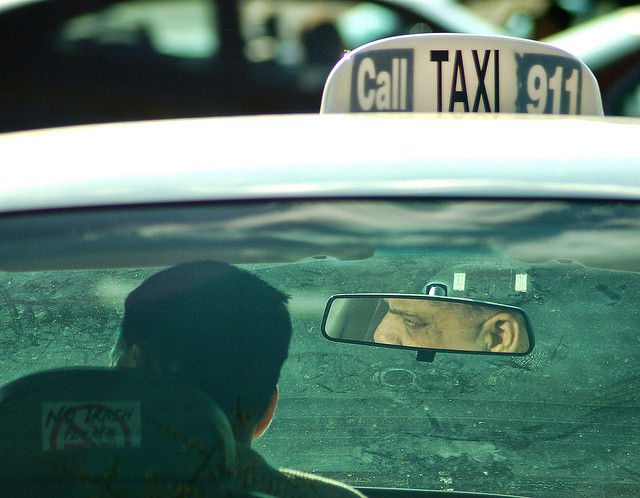 Photo by andertho
Dining and dashing is a well-known problem for many restaurants, but is riding and running a similar problem for cab drivers? That was the question that the D.C. Taxicab Commission discussed today in a first-of-its-kind informational hearing on the problem of passengers who flee before paying the fare for their ride.
At the hearing, a number of cab drivers complained that the problem is widespread, and that they have little recourse when it happens. If they call police, they claimed, they’re the one treated like criminals; others argued that they come from cultures in which reporting mistreatment isn’t the norm. Moreover, they said, the problem has gotten worse since the District adopted a meter system in 2007, since drivers can no longer ask for the full fare or a deposit up front.
“Why can’t we get our money in advance? Why do we have to take the hassle for our fares?” asked Earl Stoddard, a 44-year driver who said that taxicabs are the only form of public transit where payment comes at the end of the ride.
Stoddard also argued that parts of the city were less likely to see taxicab service because of driver concerns that they won’t get paid.
“It’s troublesome out there now…in certain parts of this city, if you can’t get your fare in advance, you won’t get your fare at all,” he said.
D.C. Taxicab Commissioner Ron Linton said that he considered the problem “substantial,” but asked cab drivers to collect testimony so that he could more accurately weigh how widespread it is and what possible solutions could be. He seemed to entertain the idea of allowing drivers to ask for payment in advance, though pointed out that the meter system makes estimating final fares difficult.
The hearing was the first of a series that Linton said he would call to discuss concerns of both riders and drivers. Linton, who was appointed by Mayor Vince Gray, said that the hearings were part of an effort to improve the commission’s standing amongst cabbies and consumers, neither of which see its work in particularly positive light.
The pent-up frustrations he may have to overcome were on full display this morning, as drivers complained of not having anywhere to go to air their grievances.
“We really don’t get a sense that drivers are heard, that they’re understood, that they’re appreciated,” said Leroy Arms, a 20-year driver, while commending Linton on holding the hearing.
At a recent D.C. Council hearing, Linton laid out Gray’s eight-point plan for improving service in the District’s 8,500 cabs. Some of those steps, though, may well come at the expense of a surcharge on every fare. During the hearing this morning, he said he aimed to balance the needs of the drivers and the riders.
“It’s a tradeoff,” Linton said.