Martin Austermuhle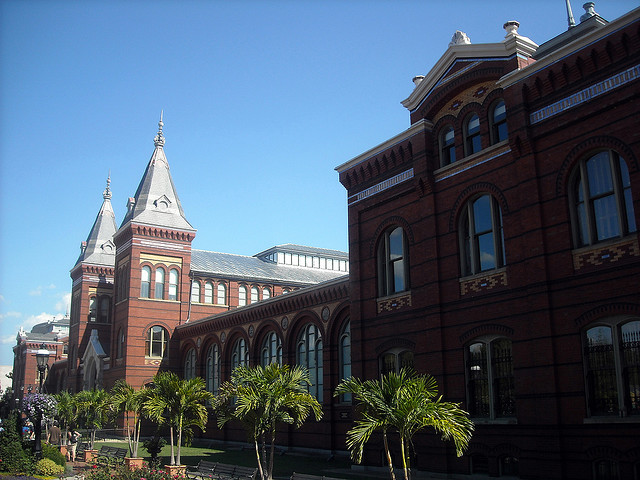
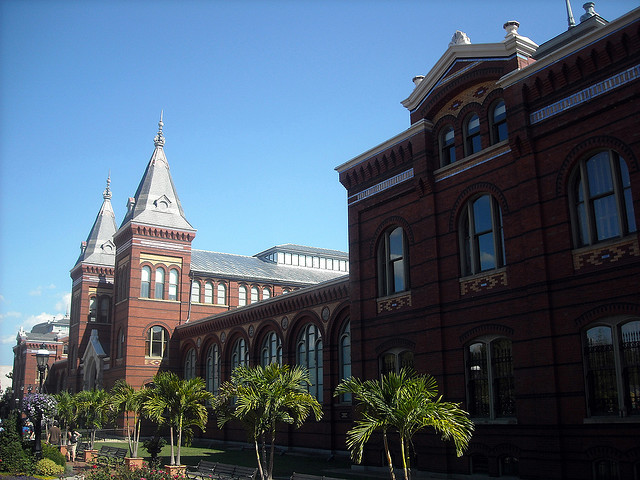 Photo by NCinDC
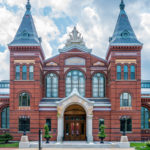
The Smithsonian’s Arts and Industries Bulding on the National Mall may soon have a new use: the location for the Smithsonian American Latino Museum.
Bipartisan legislation was introduced in Congress yesterday that would allow the new museum to take over the building, which was designed by Adolf Cluss (of Eastern Market and Franklin School fame) and built in 1881, and is currently closed for significant renovations.
The legislation, sponsored by Majority Leader Harry Reid (D-NV), Sen. Robert Menendez (D-NJ), Sen. Marco Rubio (R-FL), Rep. Xavier Becerra (D-CA) and Rep. Ileana Ros-Lehtinen (R-FL), follows a May 2011 report from the National Museum of the American Latino Commission, a 23-member commission created by Congress in 2008. That report proposed two locations for the museum — one at the foot of the U.S. Capitol, another at the Arts and Industries Building. For the latter, an interesting option was presented: demolishing the Department of Energy headquarters across Independence Avenue and using it for a secondary annex. Should that prove impractical, the report noted, an underground annex could be built.
All told, the Arts and Industries option would cost north of $200 million.
The idea of a Latino-centric museum has been floating around since the 1990s, and it has been controversial since. Critics decry the idea of another identity-specific museum; proponents note that since Native American and African Americans have received their own museums, so too should Latinos.
“With this legislation we continue moving forward with the creation of national museum that honors the countless political, cultural, and economic contributions of the Latino community,” said Sen. Menendez in a statement. “One step at a time, we are bringing to fruition a long overdue project to honor and document the influence American Latinos have had in weaving the cultural and historical fabric of American life throughout our nation’s history. A Museum of the American Latino would officially acknowledge that the success of this country could not have been accomplished without the achievements of Hispanic Americans.”