Martin Austermuhle
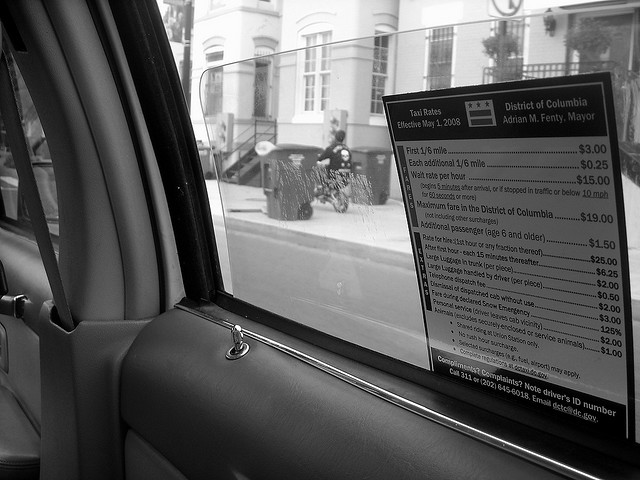 Photo by NCinDC
The post was updated at 11 a.m.
In a 20-page proposal released this morning, the D.C. Taxicab Commission found that justification existed for raising rates, though it bucked proposals for more dramatic hikes and noted that “industry improvements are a must.”
Under the proposal, which is posted below, the drop rate would remain at $3 while per-mile charges would increase from $1.50 to $2.16. In another change, mileage would be measured in one-eighth mile increments, so instead of paying 25 cents per sixth-of-a-mile as riders do now, they’ll instead shell out 27 cents for every eighth-of-a-mile. Hourly waiting charges would increase from $15 to $25, while surcharges on fuel, extra passengers and bags would be eliminated.
According to the proposal, the average two-and-a-half mile trip would cost $1.28 more, while trips shorter than five miles would see a fare increase of $1.84.
In writing the proposal, which was approved unanimously, D.C. Taxicab Commission Chairman Ron Linton seemed to split the difference between driver demands and rider requests. “The commission is aware of drivers’ claims of reduction or loss of earnings,” it said, while noting that documentation to sustain the fact was “particularly difficult to locate and come by.”
At the same time, the report outlined a series of service improvements it sought, including green cabs and credit card payment options, which it hopes to phase in by Fall 2012. “In addition,” said the report, “the quality of the District’s taxi operator education, professionalism and customer service skills and knowledge must be improved immediately.”
Predictably, reactions on the proposal were split.
“DC Taxi Watch is encouraged by the fair and equitable proposal released today by the Commission, and we look forward to building support among the riding public for instituting these necessary reforms as quickly as possible,” said Jack Jacobson, spokesperson for DC Taxi Watch, a new rider advocacy organization.
Larry Frankel, a driver who leads the Small Business Association of Taxicab Drivers, called the fare increase proposal a “joke” and pledged to stop it from going into effect. He said that even with surcharges, rates in D.C. were too low, and the new proposal did little to help drivers.
In September, Frankel filed a lawsuit against the commission to force it to fill vacant seats and raise the per-mile rate to $2. He said that he would work with his lawyers to file an injunction against the commissions current proposal.
In a second proposal approved by the commission, no taxicab older than five years or with more than 300,000 miles on it can be put into service, while any existing cabs older than seven years or with 400,000 miles on it will have to be retired altogether.
While many drivers have been complaining about low fares since the District adopted meters in 2008, it’s only been in the last two months that the Taxicab Commission has moved forward in considering them. (The $19 fare cap was lifted in September, though.)
In early November, Nicholas Maxwell, an independent taxicab driver, submitted a proposal under which per-mile charges would increase from $1.50 to $2.75, but at a hearing later that month, other drivers asked for a temporary rate adjustment until the issue could be more formally studied. Under the latter proposal, per-mile charges would only increase to $2 while existing surcharges would remain; Maxwell’s plan did away with virtually all surcharges.
While drivers have been pushing for a fare increase, rider advocates and representatives from the hospitality industry have asked for service improvements, ranging from credit card payment options to a uniform color for all cabs, as a precursor to any hikes.
The proposal is will published in the D.C. Register on December 23, after which it will be open to public comment for 30 days. Linton said that he would set aside two hours at the January 11 commission hearing for any additional comments from the public.