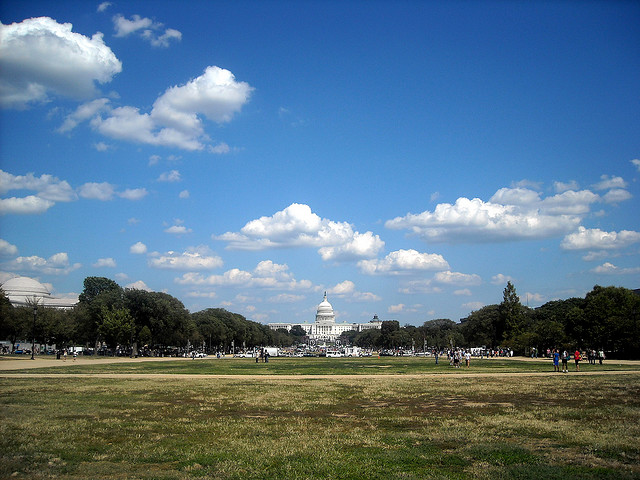
 Photo by NCinDC
Tonight at the National Archives, the National Capital Planning Commission has an interesting panel discussion tonight—titled “(r)Evolutionary Parks: The Future of Public Space”—that could shed some light on D.C.’s potential topographical future.
Usually, when we hear about the NCPC’s plans, it often comes with resident complaints about tree selection or looming omens of traffic and limits on commercial development.
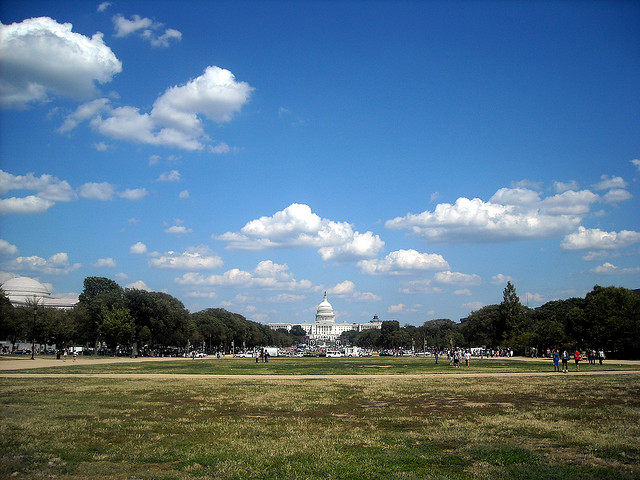
But tonight’s hearing might provide some welcome ideas about what to do with the National Mall and other federally controlled grounds around town. The Trust for the National Mall, which is a co-sponsor of tonight’s discussion, likes to say that the expanse of beaten grass and bumpy footpaths has been “loved to death.”
How, then, to make it more enjoyable in the coming years?
Rather than pointy-headed Interior Department bureaucrats or National Park Service officials, the NCPC panel tonight features people who might have more creative ideas: Jason Schupbach, the design director for the National Endowment for the Arts; John Bela, a landscape architect from San Francisco; Theaster Gates, a visual artist from Chicago; and Tupper Thomas, the founder of the Prospect Park Alliance, which has turned the once-decaying Brooklyn park into one of the nicer green spaces in New York.
Years of decay and little funding have proven federal overseers to be pretty lousy custodians of the Mall. Sure, smaller parks like McPherson Square might have gotten a bump out of the 2009 stimulus act, but a $200 million renovation for the Mall was nixed without much of a fight from anyone besides Del. Eleanor Holmes Norton. Why not bring in more artistic minds?
In 2008, Norton said, “We should all be ashamed” at the Mall’s condition. It hasn’t really gotten much better since; just a few months ago The Atlantic Cities called it a “failed” public space.
Just a suggestion on what the future of the Mall should look like: Maybe use this mild winter to plant some grass.
The panel meets tonight at 7 p.m. in the William G. McGowan Theater at the National Archives, 7th Street and Constitution Avenue NW. RSVP here.