 Photo by Justin Scott
Readers of DCist, you may have noted that I started as your new weekend editor last week. Nearly five months ago, I moved to the District after earning a master’s degree from the Medill School of Journalism at Northwestern University.
After living for close to a decade in Chicago, moving to a new city has been an adventure to say the least. In an effort to keep learning about this fine federal district beyond what’s offered in guidebooks, I plan to head to a different landmark, restaurant, shop or institution each week and report back.
I’ve been mining the brains of the all the longtime DCists I know for places that are off the radar. My first stop: Congressional Cemetery.
The cemetery was founded in 1807 and was the first burial ground in the still new federal city. Presidents, legislators and military officials as well as civilians are buried in over 35 acres of land. Originally dubbed the Washington Parish Burial Ground, in 1830 members of congress began calling it the Congressional Burying Grounds because the branch of government had purchased several hundred burial sites, erected monuments to members who died in office and appropriated funds for its improvement.
Upon arriving at the cemetery’s E Street SE entrance, a pair of tall iron gates welcomes visitors. A black mailbox at the entrance labeled “tours” houses brochures with different walking tours. I picked “Men of Adventure” then promptly went off-map in search of the burial ground’s most famous inhabitants.
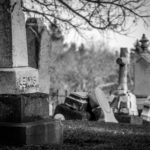
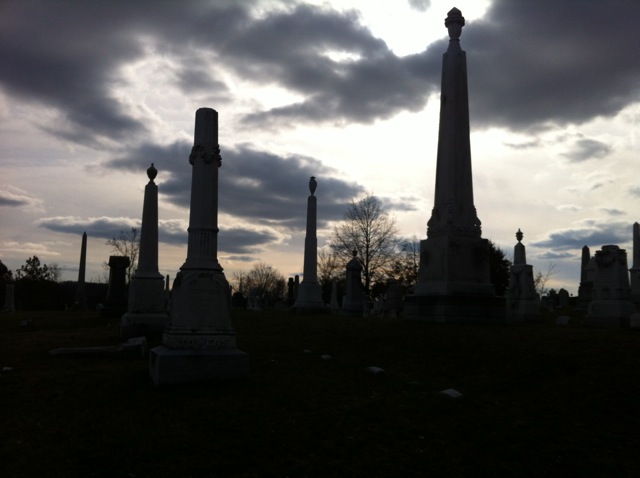
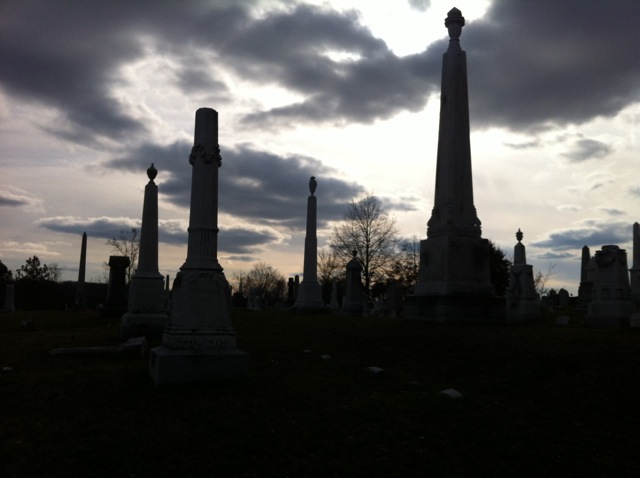
The first thing that struck me about the virtually empty Congressional Cemetery this afternoon was a sense of romance that is missing from a visit to Arlington National Cemetery. The grave markers and family vaults are old, really old; some so weather-worn that the names of those buried below can’t be distinguished. The manageable size and quaint gatehouse and chapel aid in creating the atmosphere of a bygone era.
Walking along the main path, Congressional Road, toward the chapel, visitors can’t help but notice rows of memorials called cenotaphs. Centotaph means “empty tomb” and this cemetery’s memorials were erected to honor the memory of congressmen who died while still in office.
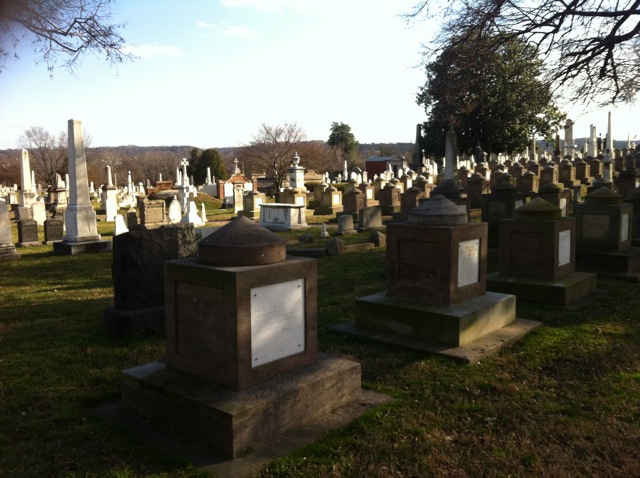 Cenotaphs. By Justin Scott
After a bit of aimless meandering toward a large totem pole called “The Healing Pole,” I stumbled upon the grave of one of the famous men I’d been hoping to visit, composer John Philip Sousa. As a former middle school band geek, I was happy to see him again.
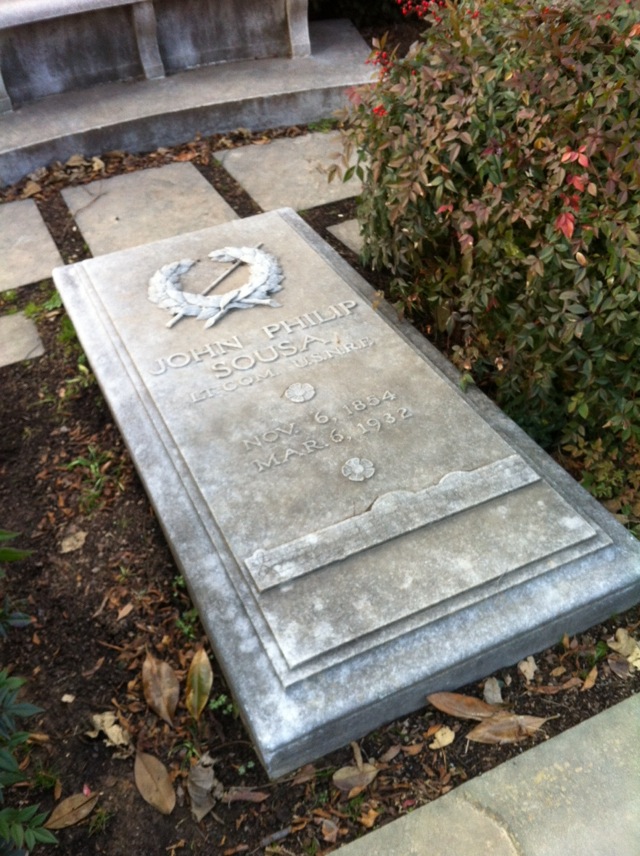 Grave of John Philip Sousa. Photo by Justin Scott
Another notable feature of the Congressional Cemetery is that it doubles as a dog park. Owners can buy a year-long membership at CemeteryDogs.org that allows them to bring their pooch to the burial grounds to roam and run off-leash. There were no dogs out today, however, I did see many watering bowls at the ready.
The last stop of the visit was clear across the cemetery from Sousa, at the grave of J. Edgar Hoover, the FBI’s founding director. The little fence surrounding the burial site as well as the attending bench made it as ceremonial as a tourist can hope for.
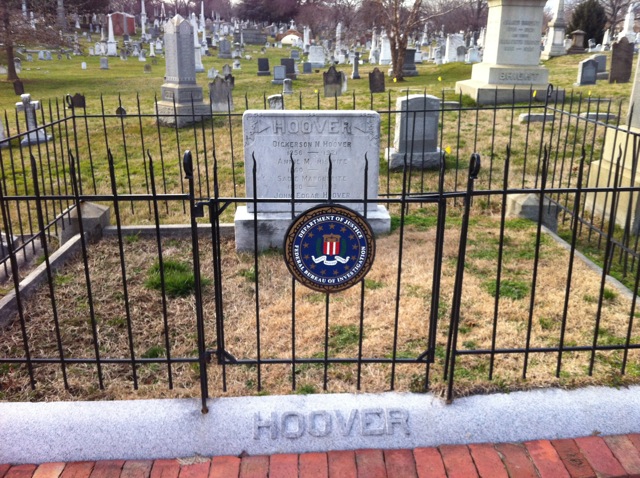 J. Edgar Hoover’s grave. Photo by Justin Scott
Perhaps even more interesting than Hoover’s grave was the cluster of graves dedicated to gay veterans. There was even an empty marker for a proud gay veteran still among the living. I’d never seen anything like this in other cemeterys I visited and was struck by slogans like, “I was awarded for killing two men and discharged for loving one.”
Though today was a bit chilly, the visit to Congressional Cemetery was ultimately worth it. There are plans for a puppy in the near future and I would certainly consider a membership to walk the dog among the many many more historic and important burial sites housed at 18th and E streets SE.
Visit the cemetery’s website for downloadable walking tours and more history.