Martin Austermuhle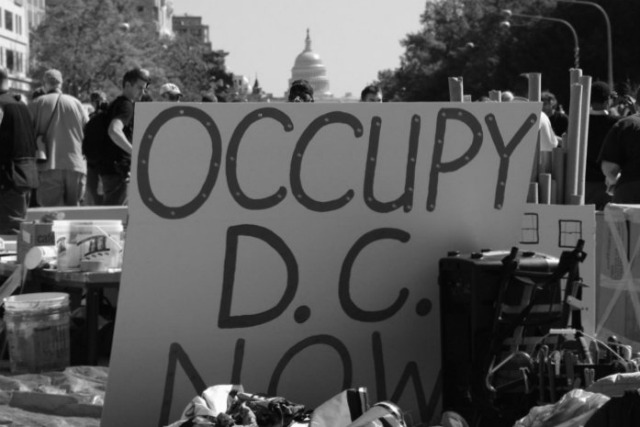
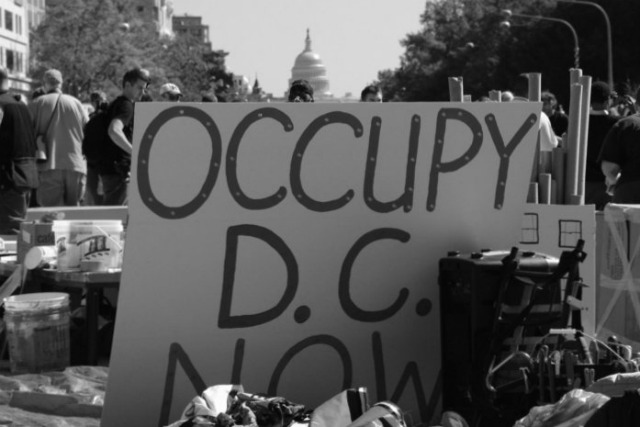 Photo by philliefan99
Ever since the Occupy Wall Street movement coined the protest slogan “We are the 99 percent!”, it has been bandied around as an admonition of the income inequality that has grown throughout the U.S. in recent years. But as anyone will tell you, the 99 percent isn’t a homogenous group, much less do all its members have the same interests, ideological inclinations or even incomes. Neither do members of the hated 1 percent, it seems.
Yesterday The New York Times dug into the 1 percent, highlighting how a 1-percenter in one part of the country could easily be a 99-percenter somewhere else. (It used a national standard of $380,000 per household to make it into the upper echelons.) In a U.S. map printed alongside the article, it showed the variations in wealth across the country — and how being a 1-percenter certainly isn’t the same everywhere you go.
Not surprisingly, being a 1-percenter in a metropolitan area requires a lot more than in a smaller city where property values and the cost of living are lower. In the District, for example, it takes an annual income of $513,000 to be amongst the 1 percent, putting us below national leader Stamford, Connecticut ($908,000), New York ($609,000) and San Francisco ($558,000) but ahead of Chicago ($480,000) and Los Angeles ($467,000).
Regionally, our 1-percenters are richer than in Baltimore ($433,000) and Richmond ($410,000). But if you’re looking to stretch your dollar as far as it can go to break into the 1 percent ranks, Hagerstown may be for you — it takes an annual income of $271,000 to be at the top there.
Still, what matters most is whether all boats are rising together, and in the District they’re certainly not. According to numbers from the U.S. Census, the District is amongst the most unequal cities in the country — only Atlanta and New Orleans beat us when it comes to income inequality.