Martin Austermuhle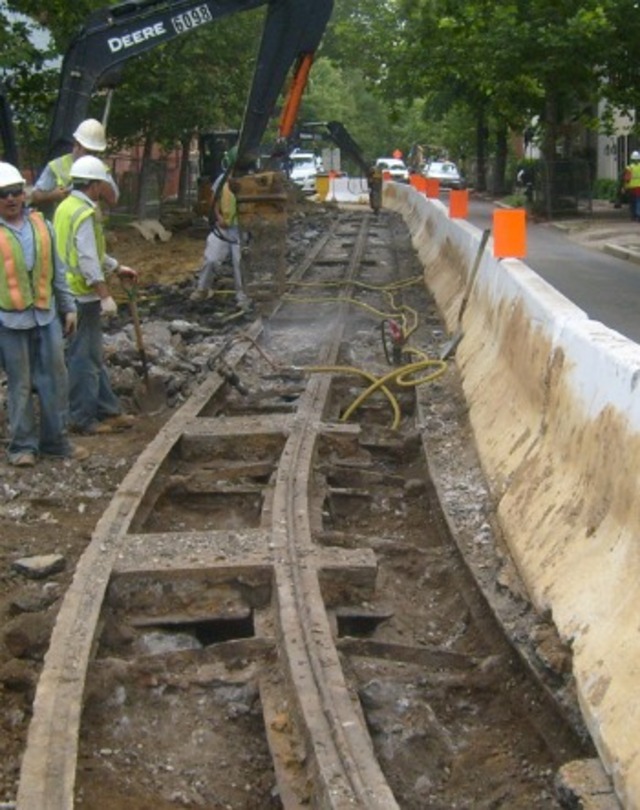
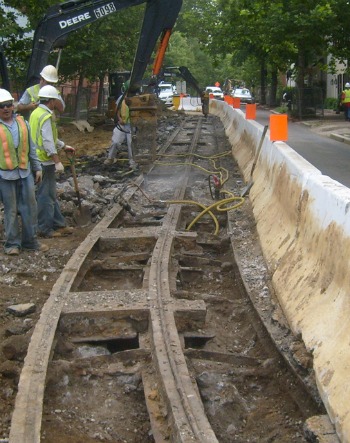 The streetcar tracks in Georgetown. Photo courtesy of the O & P Streets Rehabilitation Project
Historic preservation is a good thing. And a bad thing. On the one hand, it keeps traditional neighborhoods like Capitol Hill looking much the way they did when they were first built. There’s certainly some value to that. On the other hand, it imposes all sorts of restrictions on homeowners or contractors, who have to abide by strict standards on everything from windows to how big a porch can be.
There are certainly few neighborhoods as historic as Georgetown is, and walking down some of its back streets you can quickly come to appreciate its designation as a historic district. But a rehabilitation project on O and P Streets NW is starting to show how sometimes sticking to what something was historically can be a pain, practically.
Georgetown Patch is reporting today that contractors working on the rehabilitation project have run into something of an obstacle: they’re going to have to find historically accurate streetcar tracks to replace the ones they’re ripping out, which in many cases have succumbed to the elements and can’t be reused:
As the streetcar tracks began to come out of the ground in October, the contractors quickly discovered that most of the center rails were grossly worn away. The center rails, which once served as the electrical conduit for the city-wide streetcar system, had been exposed to the elements because of a drainage channel for the electrical system.
The future is uncertain. Four blocks of tracks have been dug up, another four remain, though only one and a half of those have any center rails left to speak of. The other two and a half have completely eroded with age and exposure.
It’s no surprise that the existing tracks might be done and replacements hard to find — the streetcars ran along O and P Streets from 1903 to 1960, after which the city’s streetcar network was dismantled.
The project, which includes replacing 100-year-old water mains, started early last year and is scheduled to be completed by Fall 2012 and cost $12.3 million. Officials in charge of the project don’t expect finding new streetcar tracks to add much by way of cost, reports Patch.