Martin Austermuhle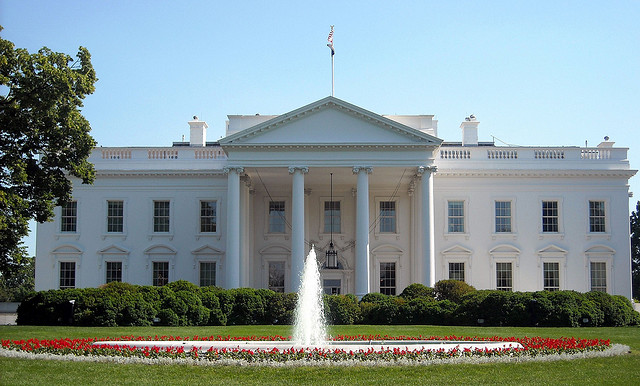
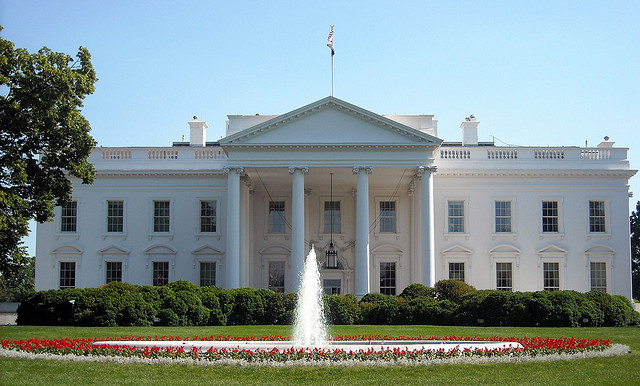 Photo by NCinDC
As the nation observes Presidents Day (also recognized as George Washington’s birthday), we thought it would be a good opportunity to look back on the presidents that have most impacted the District. From the city’s founding to the present day, not only have we called the nation’s presidents our most famous neighbors, but we’ve also been the beneficiaries and victims of some of their politics and policies. We’ve compiled a list of some of the presidents that have most affected how our fair city has grown and developed; if you’re a history buff and feel we’ve overlooked any of them, please leave your contributions in the comments. (For a good historical read, check out Theodore Noyes’ “The Presidents and the National Capital.”)
George Washington: The man after which the city was named certainly deserves top billing, both because he was responsible for choosing the land upon which a new capital would be built and because his family’s coat of arms would become what we proudly fly as our official flag today. (Thankfully, his coat of arms was pretty sweet looking.) It’s certainly worth celebrating that Washington was first, because had he switched places with Andrew Jackson, we’d all be living in Jacksonville.
John Adams: Despite being the country’s second president, Adams was actually the first president to live in the White House. Prior to its construction, U.S. presidents lived in Philadelphia.
James Madison: While Washington may have been responsible for choosing the land that we now call home, Madison was somewhat responsible for the existing structure that now denies us voting representation. In the late 1700s, Madison argued that the nation’s new capital city would have to be insulated from any state’s government and influence, thus creating what we now know of as the national capital district. He also argued that the federal government should “exercise exclusive legislation” over the District, a reality that remains today. To his credit, Madison did call for a “municipal legislature for local purposes, derived from their own suffrages” for District residents. Madison also entered the U.S. into War of 1812, in which the British burned down the White House and U.S. Capitol.
John Quincy Adams/Andrew Jackson: Both Adams and Jackson were largely responsible for the creation of our most valuable network of free museums — the Smithsonian Institution.
Abraham Lincoln: Love the annual summer music series at Ft. Reno? Lincoln is in part to thank, since it was during his presidency that a ring of forts was built around the city to protect it from hostile confederate advances. Not all 68 forts remain, but Ft. Reno is one of the more noteworthy. Additionally, in April 1862 Lincoln declared that slaves within the District were free, a move that came six months before slaves were similarly freed in 10 states not under union control. (The 150th celebration of D.C. Emancipation Day will be on April 16.) Three years later, he was assassinated at Ford’s Theatre in Penn Quarter, and assassin John Wilkes Booth made his escape across what is now the 11th Street Bridge.
Ulysses S. Grant: Had it not been for Grant, the nation’s capital could have been moved out of Washington altogether. During his term, Grant signed the Organic Act of 1871 (which created a local government for the city’s growing population) and oversaw the modernization of much of the city’s infrastructure under Alexander Robey Shepherd and the Board of Public Works. Sadly, Shepard’s initiatives bankrupted the city and led Congress to repeal any semblance of Home Rule three years later. D’oh!
Grover Cleveland: Live in Cleveland Park? President Cleveland is to thank for that one — he once rented a summer home there, and neighbors appreciated it so much that they named the whole neighborhood after him. Cleveland was also president when the District fully adopted streetcars in the late 1880s; the system remained in place until 1962.
Benjamin Harrison: The 23rd president signed the law that created what we now enjoy as Rock Creek Park.
Franklin Delano Roosevelt: FDR’s New Deal and the advent of World Ward II saw substantial growth in Washington, both in terms of people and physical structures. It was in 1950 that the city’s population hit its historic high point of 802,000 residents.
Lyndon B. Johnson: It was Johnson who lobbied for and helped push through what became the 1973 District of Columbia Home Rule Act, the law that finally gave District residents a locally elected government. (Very appropriately, Walter Washington became the District’s first elected mayor in 1975.) Johnson was also responsible for quelling the disturbances in the District after Martin Luther King, Jr.’s 1968 assassination — he did it using over 13,000 troops. Fun fact: Johnson was the first president to receive the District’s three electoral votes, which the city got in 1961.)
Jimmy Carter: Carter may not have made many waves in his one-term presidency, but he did one thing that that few other presidents have done — he sent his daughter to a D.C. public school.
Bill Clinton: In 1992, Clinton took a stroll along Georgia Avenue, and a few years later he put the city’s “Taxation Without Representation” tags on his presidential limo. And depending on how you look at it, it was either great or terrible when in 1995 Clinton signed the law that created the D.C. Control Board.
George W. Bush: His daughters put Smith Point and Town Hall on the map. Yay?
Barack Obama: President Obama has certainly made a point of being a better D.C. neighbor than Bush was, but he hasn’t done much work to further the cause of D.C. voting rights he claims to support. But as we learned this weekend, his stimulus bill certainly did help D.C.!