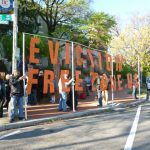
In what might be the most concrete, positive result of its actions since first appearing last October, Occupy D.C. succeeded, it appears, in helping a Bowie, Md. woman stay in her home and avoid a foreclosure sale.
Bertina Jones, 73, is the beneficiary of Occupy Our Homes D.C., an agenda that seeks to channel the Occupy movement’s general outrage toward banks and mortgage lenders into direct action to prevent homeowners who have gone into foreclosure from being evicted. Jones’ house was foreclosed upon in September 2010 shortly after Freddie Mac, the federally backed home lending giant, bought the mortgage on her home from Bank of America.
On Monday, Jones joined members of Occupy D.C. outside a Penn Quarter building housing a small Freddie Mac office where she dropped off a petition in support of her argument that series of clerical errors at Bank of America led to a lapse in her being able to make payments on her mortgage.
Tuesday, Jones and the demonstrators bused out to Freddie Mac’s headquarters in McLean where they kept up their protest of the lender. Freddie Mac and its sister organization, Fannie Mae, were placed into conservatorship in late 2008 after the collapse of the housing market, and the combined bailout of the two lenders may end up costing taxpayers as much as $154 billion until home prices stabilize.
But the protest appears to have worked. Not long after the rally outside Freddie Mac’s corporate park, Jones was invited inside to meet with the company as well as with a representative from Bank of America.
The meeting was fortuitous: A Freddie Mac spokesman told WJLA last night that the scheduled foreclosure sale of Jones’ home has been called off and that Jones and her family will be able to stay as she, Freddie Mac and Bank of America work out a solution for her mortgage.
Occupy Our Homes has been a successful tactic elsewhere around the country, perhaps most notably in Atlanta, where in December protesters rallied outside the home of an Iraq war veteran facing eviction after being foreclosed upon by JPMorgan Chase. That seems to have been an object lesson in direct action for Occupy D.C., which in the first few weeks after the clearing out of McPherson Square on February 4 seemed to have lost some of its mojo.
But it seems the movement is back, and with a tangible victory under its belt.