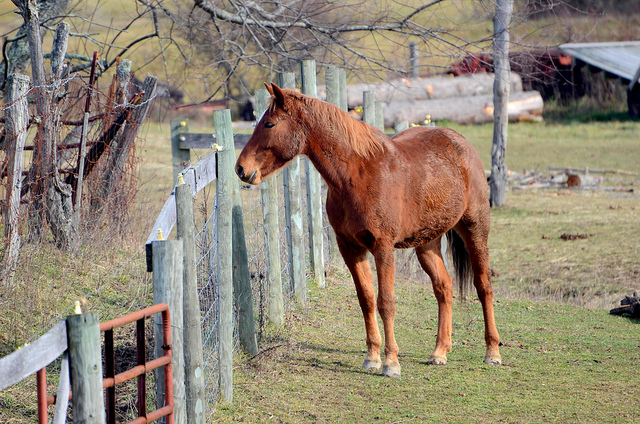
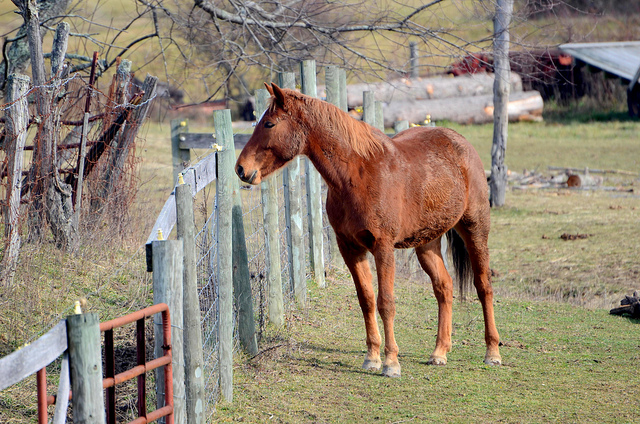
 Photo by abrowntable
Rep. James P. Moran (D-Va.) is taking on a new cause—ending the slaughter of horses in the U.S. for human consumption overseas, WAMU reported yesterday.
Moran yesterday was joined by nine-year-old Declan Gregg, a New Hampshire boy who founded campaign called Children 4 Horses in the wake of legislation passed last year that restored funding for inspections of equine slaughterhouses.
While horse meat has not been part of the American diet for many decades, it is still consumed by humans in other countries, squeamish as that might seem to us. Inspections had been defunded in 2006, effectively banning the industry and causing it to shift to Canada and Mexico. But the law signed by President Obama last November permitted U.S. horse slaughterhouses to re-open. (None have yet resumed operations.)
After learning about the law, Declan collected more than 1,000 signatures in opposition and brought them to Washington. Moran, standing at a podium beside Declan yesterday, called the restored slaughterhouse inspection funding a mistake. During appropriations negotiations last year, Moran introduced an amendment that would have continued the ban, though it was removed from the final bill.
“The truth is that horses are not raised or thought of as food production animals,” Moran told WAMU. “They’re treasured and loyal companion animals. That’s why Americans revere them, why the public rejects slaughtering them for human consumption.”
And while it’s easy to sympathize with horse enthusiasts like Declan and Moran, who co-chairs Congress’ Animal Protection Caucus, the ending of funding for slaughterhouse inspections six years ago brought with it some very disturbing effects.
Writing in the March issue of The Atlantic, Darcy Courteau, a writer in D.C., recounted going to livestock auctions during her childhood in Arkansas. The ending of inspections combined with the wider recession did a number on the industry, but perhaps the worst effect was that conditions at slaughterhouses in Mexico are ghastly:
But the shrunken kill market had an unhappy consequence for small-time farmers and traders. Chester Palmer, the horseman who produced the Carthage sale, held his first auction 14 years ago. Back then, a harnessed team of horses pulled in $6,000; now it’s lucky to draw half that. “When they took the killer market away from us, that took the wholesale out of the deal,” Palmer, who’s spent his entire life around horses, told me. “A horse is worth $500 to kill. If you wanted to take one home, you had to outbid the killers.”
It’s not only the sellers who suffered. In states across the country, reported cases of equine abuse, neglect, and abandonment skyrocketed. And the kill buyers of yesteryear aggregated into rarer but still more haunting boogeymen, purchasing for the abattoirs of Canada or, worse, Mexico, where horses at some slaughterhouses are reportedly subject to torturous conditions. In hard economic times, Palmer believes, horses are better off with the domestic slaughterhouses operating: “They’ll take a ride to the killer plant and in two days, they’re gone. It takes six months for a horse to starve to death.”