Martin Austermuhle
 An editorial cartoon celebrating the ratification of the 23rd Amendment that appeared in the Washington Star.
On this day in 1961, residents of the District finally gained the right to vote in presidential elections when Ohio became the 38th state to ratify the 23rd Amendment to the Constitution. Yes, that’s right—prior to the amendment’s ratification, residents of the District weren’t only denied any semblance of local governance, but were also completely shut out of national politics too.
In an op-ed written to coincide with the 50th anniversary of the amendment’s ratification last year, Northwestern history professor Kate Masur nicely summed up why the inclusion of D.C. residents in national politics was both a sign of progress and indication of the frustration with all that’s left to be accomplished:
Washington is an undemocratic anomaly, despite the grand ideals of equal rights carved into the city’s stone monuments. Its second-class citizenship is a legacy of racial injustice and, more recently, partisanship in Congress […] Today, as the black population edges downward from a majority toward a plurality, the capital’s residents remain at the mercy of Congress. They are represented by a lone House delegate with limited voting rights. Even their hold on home rule, granted at last in 1973, is tenuous. City budgets require approval by Congress, and Republican lawmakers have overruled or threatened local decisions on issues like needle exchange, gun control, same-sex marriage and abortion.
The 23rd Amendment is a reminder that support can be rallied for greater democracy for the district. And yet, in our polarized political climate, the powerful argument for voting representation in Congress seems perpetually stymied.
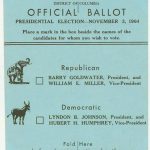
It wasn’t until November 1964 that D.C. residents were actually able to cast ballots, though, and they overwhelmingly went for Lyndon B. Johnson—a strong supporter of D.C. Home Rule.