 “If I had a penny for my thoughts I’d be a millionaire.”
The day before the Beastie Boys’ Adam Yauch—better known as MCA—died last week, the rap legends were slapped with a lawsuit filed on behalf of the D.C. go-go band Trouble Funk, according to documents obtained yesterday by AllHipHop.com.
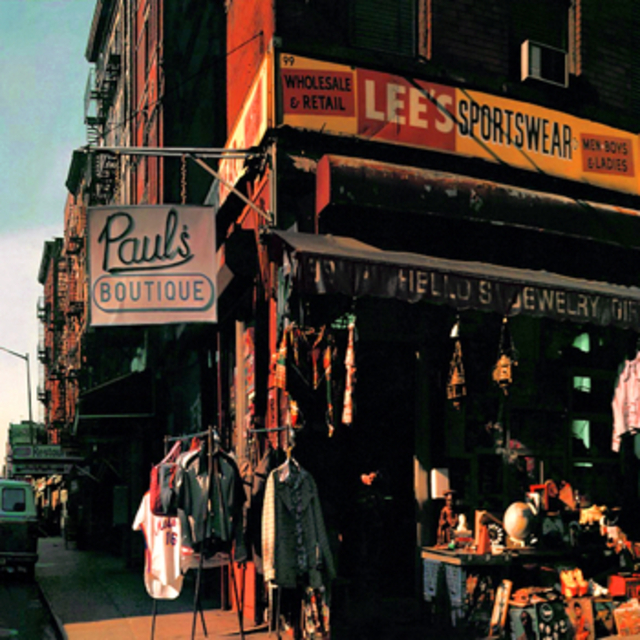
The company filing the suit, Tuff City, claims that the Beasties’ wrongfully sampled Trouble Funk beats on several tracks on their classic albums Licensed to Ill and Paul’s Boutique.
Tuff City’s suit alleges that the Beastie Boys appropriated portions of Trouble Funk’s 1982 song “Drop The Bomb” for “Hold It Now Hit It” and “The New Style” on Licensed to Ill and again for “Car Thief” on Paul’s Boutique.
A quick listen to “Hold It Now Hit It” reveals a drum beat that sounds like a slightly slowed-down version of the one on “Drop the Bomb,” which you can listen to here:
In addition to the three songs on which the Beasties allegedly misused “Drop the Bomb,” Tuff City also charges that another 1982 Trouble Funk track, “Say What,” was wrongfully used to score the beat for the Paul’s Boutique track “Shadrach.” Besides “Say What,” “Shadrach” also samples from songs by James Brown, Sly and the Family Stone and Sugar Hill Gang, and makes lyrical references to AC/DC.
But Trouble Funk, it turns out, wasn’t even aware of the sampling or even of Yauch’s passing until contacted by reporters. The go-go outfit’s leader, “Big Tony” Fisher, told The Washington Post that the group hired Tuff City more than a decade ago to go after “people that have been using and abusing our stuff without our permission.”
In fact, the two groups once toured together, giving Fisher pause when he learned of MCA’s death after a long bout with cancer:
“Wow, I’m sorry to hear that,” Fisher said. “We toured with the Beastie Boys and I like ’em. They’re good cats. And they really admired the band. I’m so sorry to hear that.”
Paul’s Boutique is something of a landmark achievement in creative sampling, believed to contain as many as 300 references to other songs. But in the wake of MCA’s death, some, like Slate’s Matt Yglesias, are curious if such an album would be possible today after more than two decades of new laws and court rulings that restrict what constitute’s “fair use.”