Martin Austermuhle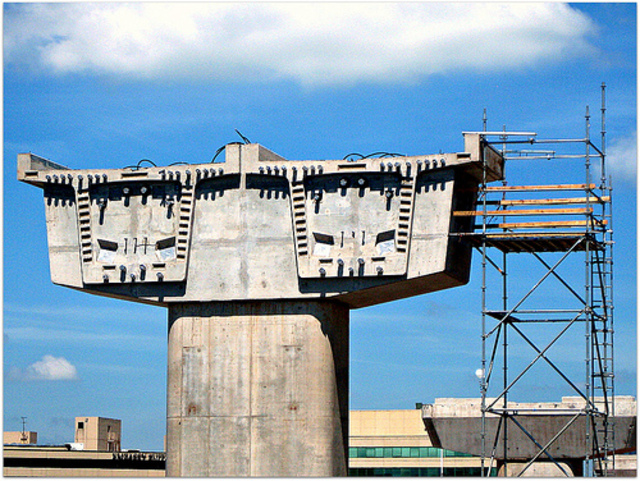
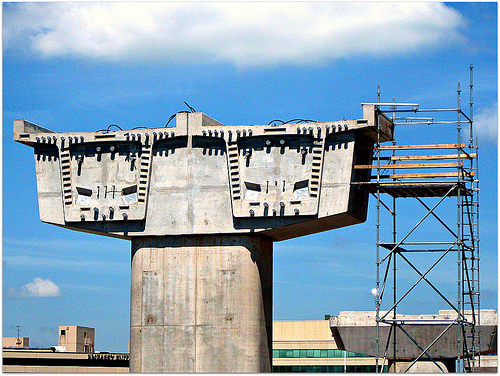 Photo by FlipMode79
Responding to fears that the second phase of Metro’s Silver Line out to Dulles Airport and Loudoun County could be in jeopardy, the Metropolitan Washington Airports Authority voted today to remove a pro-union incentive for contractors that had raised the ire of officials in Virginia.
The project labor agreement for the second phase wouldn’t mandate that union labor be used for construction, but rather give preference to contractors that agree to use it. The agreement caused consternation in Virginia, a right to work state, and provoked Gov. Bob McDonnell to threaten to withhold further funding for the project. It also further irritated Republican legislators in Loudoun County, who have until July 4 to decide if they want to opt out of the Silver Line altogether.
To opponents of the project labor agreement, the decision means that the construction of the second phase will be cheaper. To proponents, like the Post’s Steve Pearlstein, this was little more than an ideological fight that has little relevance to the Silver Line:
What’s so silly about this controversy is that there are only a dozen firms that are big and experienced enough to manage a transit project of this size and complexity, and all of them are giant national and international firms that are either union shops or have long since learned to operate in both union and nonunion environments. The opportunity for local contractors is to bid on subcontracts that are explicitly not required to sign on to project labor agreements. And yet in Phase 1, 80 percent of the nonunion subs have done so voluntarily.
So what are we arguing about here? Politics. Ideology. Certainly nothing that is worth risking the most important economic development project in the region.
With union labor off the table, the Silver Line will be able to take hundreds of millions in funding from Virginia, which may ease toll increases on the Dulles Toll Road. Construction on the $3 billion second phase is expected to end by 2016; the first phase out to Reston should be ready by next year.