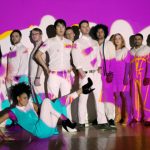
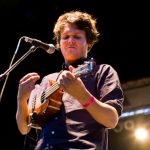
Ben Taylor grew up attending Dischord shows in D.C., and it was that post-punk atmosphere that helped influence Taylor as he formed JC Brooks & the Uptown Sound in Chicago in 2007. A soul band through and through, their infectious sound and intensely energetic live sets (with a touch of old-school theatrics) have garnered them a growing fan base hungry for something new. DCist caught up with bassist and vocalist Taylor right after their Black Cat backstage set last month and ahead of their (free!) show tonight in Baltimore.
So, where did you grow up?
I was born in the District and I grew up mostly in Northern Virginia. I went to high school in Fairfax, where I was in a band with Joe Easley, who went on to be the drummer for the Dismemberment Plan. When I went off to college, I was replaced by Ron Lewis, from The Fruit Bats, and who plays bass on the new Shins record.
What was the band you were in with Easley?
The Newmans. We were a good high school band.
You played the Black Cat backstage the night Chuck Brown passed away, and the band did your own tribute to him during the set. Did you listen to go-go music much growing up in the area?
I never made it to see any go-go shows. My parents let me go to the 9:30 Club, the old 9:30 Club, but that was tough enough to get there. I wasn’t savvy enough to find go-go shows. It was definitely something we were hearing, and I remember go-go as something my friends would be jamming on, those beats stuck out. But I’ve picked up on it more in the last few years. Trouble Funk has been a big one.
What I remember reading about was the Dischord bands, like, Minor Threat’s last show, they had Trouble Funk play on the bill. Ian Mackaye and Henry Rollins really got turned onto that stuff and were willing to share that with everyone else. That mish-mash that doesn’t really go together is what we have really been into as a band. You don’t have to listen to just one kind of music anymore.
I was going to ask if you listened to a lot of Dischord artists growing up, but sounds like you’ve answered that.
I went to a lot of the Dischord shows when I was growing up. I saw Fugazi at Sacred Heart, the church basement shows. That was really big for me. When we put this band together, there was this element of post-punk. What I always liked about Fugazi was that they were funky, they had a lot of this dub, reggae element in this rhythm section. We like bringing the southern soul into that but still having this high-energy, aggressive music. That’s what we’re going for.
The Positive Force shows at Sacred Heart are still happening, Ted Leo performed there recently.
We just met somebody who was working with Positive Force, and there’s a possibility of us playing one of those Positive Force shows, which would be amazing, for me. Just for one, personal upbringing, fond memories, but also knowing that they’re out there doing grassroots community work.
What were some of the other venues you would go to while you were growing up here, other than 9:30? You mean the one that was down by what’s now Gallery Place, right?
Yeah, 9th and F. Last year I was home and I was wandering around that area, talking on my phone, and all of a sudden I looked up and realized where I was, in front of the old club. That area has changed a lot in 20 years.
I interviewed Mary Timony last year and she mentioned going to shows at DC Space. Did you ever go?
A lot of my friends went there. I was supposed to see Shudder to Think there, when D.C. Space was closing. I went with some friends and we were waiting in line, and some people cut in line in front of us and then we were turned away at the door, they were full. So I missed my chance.
Speaking of show ettiquette, what would be your pro tips for people attending your shows?
For our shows? Just dance. We are an intereactive show. There’s a lot of call and response. When we yell, “Let me hear you say ‘Yeah!’” having 200 people yell “Yeah!” back at you that just amps up the energy for us.
When JC asks you to sing something, you sing it. Poeple feel comfortable dancing. We’ve played some shows recently, in a new town, and we’re warming up, people are sitting on the edges of the dance floor and then a couple songs in, they’re moving. There’s no “too cool to dance” attitude or anything. The more receptive we see people are, the more energy we get back.
What’s your favorite venue to play at in D.C.?
The first time we played in D.C. was at 9:30 Club. We were the house band for a soul review. The organization that put it on was Numero Group, they’re a reissue record label. They specialize in digging up real obscure, lost stuff. They hired us to be the backing band for three or four Chicago artists. The headliner was a guy named Syl Johnson. He’s been sampled a lot by a lot of hip-hop artists. He’s a Chicago soul guy who went on to work with Al Green’s people in Memphis. Numero Group re-released a lot of his stuff and then hired us to back him up in a show we took on the road in 2009. We always have great shows at the Black Cat, upstairs, backstage.
The band’s been labeled “neo-soul” as part of this resurenge of interest in soul music. Do you think this trend is emerging from a specific place, geographically, or is it a combination of other factors?
I think one of the factors was Amy Winehouse. Amy Winehouse definitely brought that sound to a mass audience again, and she was working with some of the people from Dap-tone Records. The people in America who did the most work in the trenches for the sheer love of the music is the guys at Daptone Records. They laid the foundation of the underground market. Every town has a retro soul band now, because Sharon Jones and the Dap-Kings led the charge. Amy Winehouse and her producers were pretty savvy in hiring those guys to work on her record. Whenever you have a big artist like that who wins a bunch of Grammys, the following year you’re going to get the Adeles, the Duffys. You saw it when Lauryn Hill won a Grammy. Anytime anybody comes out with something different, you’re going to see people not cashing in, but getting their chance in the spotlight.
It sort of snowballs. Al Green had an album two or three years ago with the Daptone horns and ?uestlove producing. The pendulum shifts, and you get interest in more roots, organic music. Booker T. did an album with the Drive-By Truckers. That sort of mixing of the older artists with newer artists, going back to older sounds.
JC introduces the band’s cover of Wilco’s “I Am Trying to Break Your Heart” by saying it was by one of his favorite soul singers.
We call Jeff Tweedy one of our favorite Chicago soul singers. I mean it is soul music, essentially, but we say it with a wink and a nod.
As a vocalist do you have any favorite singers you’d want to cover as a band?
We’ve talked about some different things. We don’t want to get pegged as that wacky soul band that covers rock tunes. Nothing’s really stuck. Before we did the Wilco song we were talking about doing a Smiths’ song, “This Charming Man.” But mostly we’re focused on writing new material. We’ve been listening to a lot of Clash in the van; Johnny Mars on guitar is influential. [Taylor later adds that they’ve recently played “Brand New Cadillac” by The Clash and David Bowie’s “Golden Years” live, but have no plans to record either.]
How did you come up with the concept for the video for “Everything Will Be Fine”?
We shot that in our manager’s office. We went to meet with him one time and it’s so 80’s, like it’s never changed. It seemed right for a set. Once we had that available, JC and Billy, our guitar player, who is also a director, they started to lte their minds run wild, and came up with J as the lawyer, who says, “We can get you your money.” It all started with the set.
JC Brooks and the Uptown Sound perform tonight at Mt. Vernon Park in Baltimore, MD as part of WTMD’s First Thursday series. Black Box Revelation and 7Horse open. Music begins at 5:30 pm. Admission is free.