Martin Austermuhle
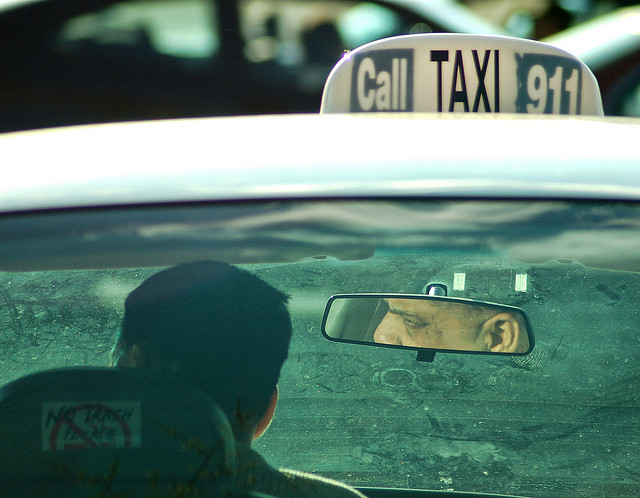 Photo by andertho
A wide-ranging taxicab modernization bill passed the D.C. Council today, promising everything from credit card payment options to more fuel-efficient vehicles for D.C.’s troubled 6,500-cab fleet.
The bill, originally introduced by Councilmembers Mary Cheh (D-Ward 3) and Tommy Wells (D-Ward 6) late last year, will mandate technology updates for cabs, increased accessibility for handicapped riders, more fuel-efficient vehicles, and increased fines and penalties for violations of taxicab regulations. The city’s cabs could eventually also all adopt a uniform color, and will be required to have uniform cruising lights on their roofs.
Along with a number of other regulatory changes, the bill could represent one of the biggest menu of changes to the city’s taxicab industry in decades. The D.C. Taxicab Commission recently mandated that cars of a certain age be taken out of circulation, and just last week Mayor Vince Gray signed a $35 million contract for smart meters that will accept credit cards, include GPS tracking and have TV screens for passengers to watch as they ride.
Of course, not everyone is happy with the provisions of the bill. Over the last two days hundreds of cab drivers protested outside the Wilson Building, saying that the bill would turn them into “sharecroppers.” Some even said that if it passed, they would strike; taxicab drivers went on strike in 2008 after meters were mandated for all cabs.
Haimanot Bizuayeh, a leader with the Small Business Association of Washington, D.C. Taxicab Drivers, said that the bill’s provisions would be financially devastating for most cab drivers, who work independently or for small companies. Bizuayeh stressed that while the organization he represented wasn’t against modernization, it didn’t understand why all taxicab would be required to use the same smart meter.
Bizuayeh also said that cab drivers were angry that upscale livery service Uber was operating without any regulation or restrictions; the D.C. Council voted to leave the sedan service alone until later this year, and also opted against a Cheh-sponsored amendment that would have set a minimum base fare for the service.
These improvements won’t be free, though. The legislation includes a 50-cent surcharge on all fares, which will go to fund the Taxicab Commission’s operations and pay for some elements of the modernization plan. Taxicab Commissioner Ron Linton said last week that the surcharge would be reviewed on an annual basis. Cab fares were increased earlier this year, though longstanding surcharges were dropped.