Martin Austermuhle
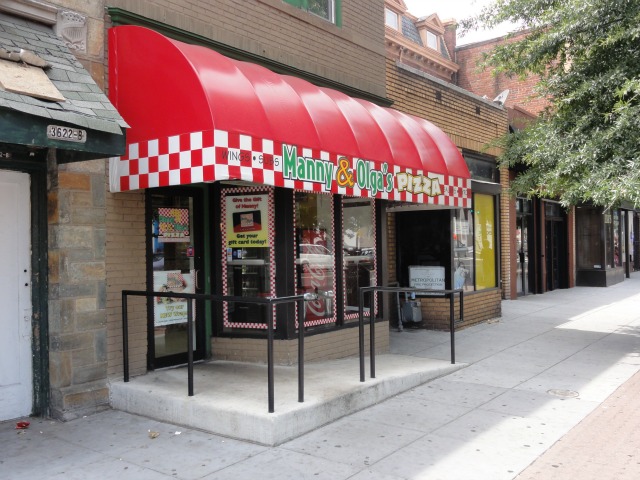
On May 16, two people parked their car outside a Manny & Olga’s pizza shop on Georgia Avenue, just steps away from the Looking Glass Lounge in the Northwest neighborhood of Park View. A man emerged from the shop and got in the car, where he was shown an iPhone. The drivers of the car said that the iPhone had been stolen from a woman, and a physical altercation had taken place during the theft. The three laughed, and after an extended negotiation with a fourth person, settled on a price for the stolen phone—$40.
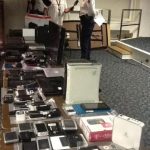
Little did the buyers of the phone know that the drivers of the car were undercover police officers, and that they had been investigating the sale of stolen goods to employees of that Manny & Olga’s location since a month prior. Last Friday, D.C. police officers raided the store, arresting a number of employees and recovering a number of stolen phones and electronic gadgets, including an iPhone, various BlackBerries, an iPod Touch, and a Bluetooth headset.
The incident at Manny & Olga’s, culled from a search warrant filed by police on July 5 and executed the next day, is but a small insight into how stolen phones and electronic gadgets—a hot commodity among consumers and criminals—are passed along from thieves to individuals and businesses that resell them.
Earlier this year, Mayor Vince Gray and D.C. Police Chief Cathy Lanier warned residents of a spike in such crimes, saying that robberies and thefts—primarily of expensive smart phones and other gadgets—had spiked from the year prior. Lanier said she was reassigning officers to the beat and providing up to $10,000 rewards for information leading to the arrest of those responsible for reselling the phones. A month later, she announced the arrest of 16 people at 13 businesses around the city accused of running fencing operations for the phones and gadgets.
According to the warrant, after a violent robbery in the Third Police District an undercover police officer with MPD’s Narcotics and Special Investigations Unit heard from a source that employees at the Manny & Olga’s were buying stolen goods. On April 2, two undercover officers—wired for audio and video—entered the pizza shop, which is part of a local chain, and sold an employee an iPhone for $100. The employee told the officer that he wanted an iPad next, and that one had recently been sold to him for $200.
Later that day, the police officers returned with a Blackberry Playbook tablet and Pantech AT&T phone. The same employee didn’t seem interested, though he did list items that he would want and told the officers that “people came to the store ‘all the time’ to sell items.” After negotiations on behalf of a fourth buyer, the police agreed to a price—$125 for the tablet and phone.
In one case, the pizza shop wasn’t just used for the sale of a stolen good—it was actually the location of the theft itself. The warrant explained that one employee robbed an intoxicated customer of his phone while he was passed out in the shop, and then even helped the victim call the police to report the theft. The employee then sold the phone to his boss.
And so it continued through the rest of April and May, as the undercover officers sold a number of phones and gadgets to employees of the pizza shop. On July 6, police pounced, arresting a number of the employees and recovering stolen goods from the shop. According to court records, two of those arrested were charged with misdemeanor counts of receiving stolen goods.
It’s not the only place that was targeted by police, either—a nearby carryout was similarly raided in recent weeks. And according to the warrant, it’s likely that the thefts occurred nearby. “Persons who traffic in stolen property are the owners, operators, or employees of small businesses located in areas where street crimes occur or where the persons committing those crimes live, which is often the source of the stolen property for sale.”
A call to MPD hasn’t yet been returned, but according to one person with knowledge of the situation, the raid on Manny & Olga’s was part of an ongoing investigation. Olga Athanasakis, the daughter of the chain’s founder who still works in the original Silver Spring shop, said she was unaware of what had happened at the Georgia Avenue location. A manager at the shop was similarly clueless as to the events that had transpired a week earlier—he was new to the shop, he said, having started on Monday.