Martin Austermuhle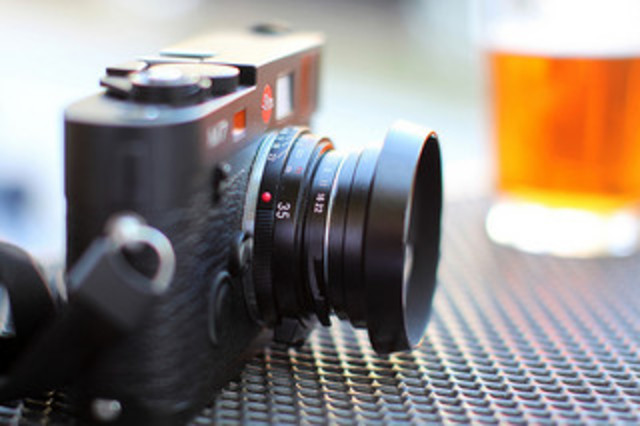
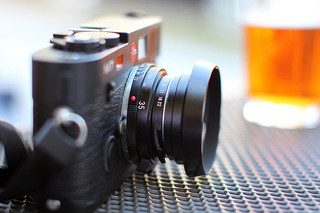 Photo by Mr. T in DC
Last week, civil libertarians celebrated a victory in D.C.—Police Chief Cathy Lanier announced a new policy that clarified that residents are free to photograph and record MPD officers as they do their jobs. But this being D.C., things are never that easy. The order is limited to the 3,800 sworn officers under Lanier’s command, but doesn’t explicitly extend to the many other police forces that operate in the city.
That being said, a number of police forces already operate under the presumption that photography and recording is OK, provided the person doing it isn’t interfering with active police work.
Caroline Lukas, a spokesperson for Metro, said that the Metro Transit Police will follow MPD’s lead. “Our existing policy for MTPD officers is generally consistent with MPD’s approach. Members of the public have the right to film in public areas, provided that they do not interfere with police activity or compromise safety,” she said in an email. Additionally, she noted, photography in stations is fine, provided that no flash or tripods are being used.
Sgt. Paul Brooks of the U.S. Park Police also said that they allow photography and videotaping, as does the U.S. Secret Service. The Capitol Police didn’t return emails requesting clarification on their policy.
The thing to watch out for, though, is how consistently the different police forces respect those policies. In March, Oskar Mosco, a D.C. pedicab operator, was arrested by Park Police after using a videotape to film officers arresting one of his fellow pedicabbers. Mosco is set to go on trial in September for assaulting a police officer and resisting arrest, charges he denies.
And just last week, after Lanier’s order had been issued, a D.C. police officer confiscated a resident’s cell phone after he used it to film an officer punching a man that was being put under arrest.
Part of the problem is that unlike MPD, some police forces don’t explicitly lay out a person’s right to photograph or record police as they work. A spokesman for the Secret Service said that while uniformed officers allow photography and recording, there’s no written policy directing them to do so.
This isn’t the first time that First Amendment policies have been applied inconsistently when it comes to photography and recording. Until a 2010 settlement was reached, guards outside of federal buildings could stop people from taking pictures. (The settlement forced guards to follow a pre-existing policy allowing photography.) In 2008, a police officer at Union Station tried to a stop a TV crew as it filmed a segment on—get this—how Amtrak was finally relenting on photography and recording in the station.
Art Spitzer, who serves as the legal director of the ACLU of the National Capital Area and helped settle the case that led to Lanier’s order, said that while the Park Police has been “fairly respectful” of First Amendment rights over the years, he’d like to see more consistency across the various agencies. “Our view is that people in D.C. should be subject to a single set of rules,” he said.
Take solace, though, that we’re not Maryland, where few police departments have adopted any policy whatsoever.