Martin Austermuhle
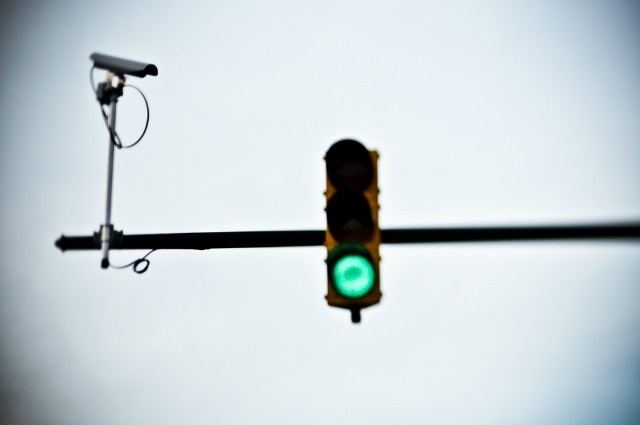 Photo by Chris Rief
Well, this is a good way to get yourself elected mayor. (And probably good public policy, too.)
Councilmember Tommy Wells (D-Ward 6) announced today that he was forming a task force tasked with exploring lowering fines for tickets issued by the city’s ever-expanding network of automated traffic cameras. The task force, which will be composed of AAA Mid-Atlantic, D.C. Pedestrian Advisory Council, D.C. Bicycle Advisory Council, and the Council for Court Excellence, will make suggestions that will then be wrapped into legislation he says he’ll introduce in the fall.
“The goal is to make sure the automated enforcement program is about safety, not just revenue,” Wells said in a statement. “Some fines have increased by 250 and 500 percent over the past four years. The goal of assuring safety has been eclipsed by the government’s dependence upon the revenue generated by high fines. With the use of cameras, assuring stricter enforcement of our traffic laws, the need for high fines should be revisited.”
The use of automated enforcement has grown dramatically over the years, so much so in Mayor Vince Gray’s 2013 budget, D.C. officials estimated that the addition of more cameras catching bad drivers doing more illegal things could rake in an additional $30 million a year. In fiscal year 2010, D.C. took in some $51 million from automated enforcement. A recent WTOP poll found that most drivers think that the cameras are being used more to generate revenue than they are to promote safe driving habits.
Lower fines aren’t a new concept, and even the devoted urbanists at Greater Greater Washington have said that lower fines applied more consistently for more offenses could be a greater deterrent than D.C.’s current practice of high fines. (Automated speeding tickets can start at $75 and increase rapidly thereafter, depending on how fast above the limit a driver is going.)
It’s also good politics, of course. D.C. legislators often grouse about tickets of all kinds, saying that D.C. hands them out too liberally and charges too much for them. Gray officials have defended the use of cameras, though, saying that as the city becomes a friendlier place for pedestrian and cyclists, ensuring that drivers follow the law can be a matter of life and death. A study by the Insurance Institute for Highway Safety found that red light cameras in various cities have helped lower crash-related fatalities.
Wells—himself an avid cyclist—said he expects the task force to address immediate adjustments to fines, dedication of revenues to road safety, graduated fines, and “other changes to ensure that the automated enforcement program is focused on safety.”