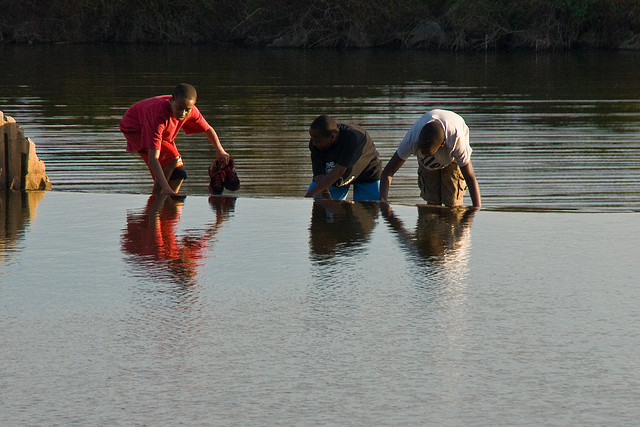
 Lake Elkhorn in Columbia, Md., is a man-made reservoir, not a lake. (Photo by Almost Sooted)
The Post’s Michael Rosenwald picked up a curious geological thread from Reddit today: Maryland has no lakes.
Well, naturally occurring, glacially formed lakes, that is.
The Old Line State was spared the topological stylings of the massive glaciers that traversed North America during the last ice age many millennia ago. The data comes via the Maryland Geological Survey, which on its website contains a page dedicated to the absence of naturally formed lakes in the state.
Nearly three-quarters of all lakes were created by glacial movements, but during the most recent ice age, none of the active glaciers entered the region that is now known as Maryland. And none of the major conditions for natural lakes—including earthquakes, volcanic activity and landslides—resulted in the creation of any bodies of water there either.
For a state defined by many rivers and creeks, Maryland was left empty when it came to standstill bodies of water. Any sites called lakes are, in fact, manmade, but most are actually deemed reservoirs.
The last time Maryland had any natural lakes was some time during the late Pleistocene Era, between 14,000 and 19,000 years ago. Geologists have documented a site called “Buckel’s Bog” in the headwater region of the north branch of the Casselman River in Garrett County in Western Maryland. All that’s left of it today, though, is pollen evidence that a lake once sat there.