Martin Austermuhle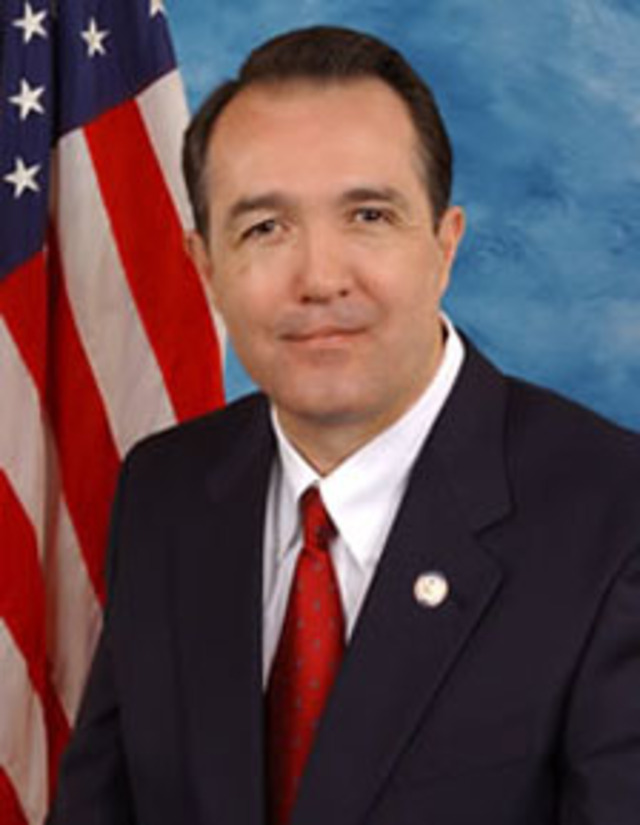
 Rep. Trent Franks (R-Ariz.)
When the House of Representatives gathers to vote today on a bill that would ban abortions in D.C. after 20 weeks, just about everyone will be watching. Both pro-life and pro-choice have said that the bill—whether implementing it or defeating it—sits atop their legislative agendas, and both sides have said that they will score today’s vote.
While the National Right to Life Committee was first to threaten judging representatives’ pro-life credentials by how they voted on the proposal—a move that sank a D.C. budget autonomy bill—yesterday Planned Parenthood and NARAL Pro-Choice America joined the fray, warning that how members of Congress voted would determine what the organizations said about them come election time.
The move by the pro-choice groups is aimed at denying the bill—first introduced by Rep. Trent Franks (R-Ariz.) in January—the necessary two-thirds majority it needs to get past the House. (It was came out of committee on a party-line vote in mid-July.) At the same time, it is also a small salvo in the larger battle over similar bills across the country, which pro-life groups say are intended to stop abortions after the point at which the fetus can feel pain. Yesterday an Arizona judge upheld that state’s version of the law, which bans abortions over 20 weeks unless one is necessary to prevent the mother’s death.
Neither side is shying away from the national implications of today’s vote, much less are they denying that D.C.—whose own legislature has been shut out of the discussion—is being used as a test case for a broader nationwide debate.
“This roll call will be a landmark—the House has never before voted on the question of whether to endorse legal abortion for any reason until birth,” NRLC Legislative Director Douglas Johnson said in a press release. “Under the Constitution, members of Congress and the President are ultimately accountable for the current abortion-until-birth policy. Any lawmaker who votes against this bill is voting to ratify the extreme policy currently in effect in the nation’s capital, where abortion is perfectly legal for any reason until the moment of birth.”
“The national implications of the D.C. abortion ban bill have been clear to the pro-choice community and women’s groups from day one,” said Del. Eleanor Holmes Norton (D-D.C.). “The bill picked on the District, seen as an easy mark in a Republican House, to thwart a wholesale reaction from the nation’s women. The bill’s intent and effect on women elsewhere, however, has not been lost on the nation’s women because the bill takes direct aim at Roe v. Wade, affecting the reproductive health of women across America. NARAL and Planned Parenthood have millions of members and supporters throughout the country. By announcing they are scoring the vote, there will be no free pass for Members of Congress who vote for the bill. Members of Congress can no longer explain to their constituents that they were voting on only a ‘D.C. bill.’ These pro-choice groups have put Members of Congress on notice that the nation’s women will also be ‘scoring’ the vote.”
In the end, though, much of this will be largely symbolic—a companion bill introduced by Sen. Mike Lee (D-Utah) is unlikely to pass the Senate, and President Obama would probably veto it if it did.