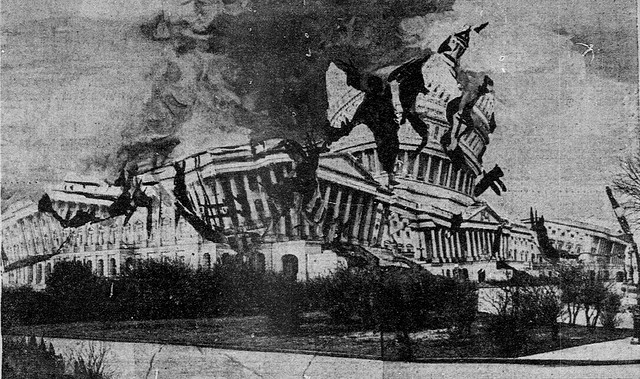
 A 1906 illustration in The Washington Times posited what might happen if an earthquake struck D.C. (via Library of Congress)
Can you believe it’s been a year since we all felt certain doom at the hands of angry nature?
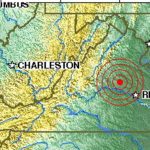
Exactly one year ago today, D.C. and much of the rest of the East Coast felt a great rumbling when a 5.8-magnitude earthquake rumbled out of sleepy little Mineral, Va., sending panic and frenzy into a swath of the United States not accustomed to the ground rocking beneath its feet.
Yeah, it made for a crazy afternoon. The streets flooded with evacuated office workers, above-average traffic as drivers hustled to get out of town and Californians mocking our temporary, temblor-induced insanity. Davy DCist added a new layer of emergency to his already manic life. And he’s been virtually unheard-from ever since.
But as earthquakes go, this one had a low impact on a human level. Only a few minor injuries were ever reported and structural damage, while widespread, was mostly limited.
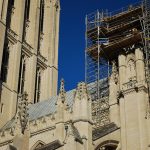
Except where it wasn’t. The Washington Monument and the Washington National Cathedral, more than 90 miles away from the epicenter, took the most visible hits, with one of the cathedral’s finials toppling to the ground. The 555-foot-high Washington Monument, meanwhile, suffered extensive cracking to its masonry, especially at the upper levels. Both sites were immediately shuttered.
The National Cathedral reopened last November after two-and-a-half months of architectural inspections, though its central tower, housing the church’s impressive carillon, remained closed until March. Still, to repair all the earthquake damage, the cathedral is seeking to cover $20 million worth of damage. The Lilly Foundation announced that it will be putting up a quarter of that sum, the Post reported today, as repairs commence on the cathedral’s many limestone features.
The Washington Monument, however, is still a long time from being ready for public access. Video from inside the structure as it was shaking doesn’t begin to convey how much damage the great spire took:
The National Park Service estimates it will cost about $15 million to fix up the monument; in January, the investor and philanthropist David Rubeinstein pledged half that amount. But reopening the monument will be a much longer process than the cathedral. The NPS said last month that much of the damage was in the hunches, or lips, that the monument’s stones sit on. Once contracts are awarded later this year, workers will spend nearly all of 2013 patching the monument with epoxies and anchors.
“We’re not going to be replacing stone, we’re going to be repairing stone,” NPS spokeswoman Carol B. Johnson told DCist in July.
But it won’t be until late 2013 or, more likely, early 2014 that tourists can re-enter the Washington Monument, which will soon be dressed in a foot-to-tip scaffolding that will remind many of the cover it wore during its cosmetic overhaul in the late 1990s.
Mineral, a sleepy hamlet with a population of 424 that was the epicenter of the whole thing, and surrounding Louisa County did take a bit more of a beating in the quake. Louisa County schools reported $61 million worth of damage, and the Federal Emergency Management Agency doled out $16.5 million in emergency relief payments to local residents.
Still, assuming there are no anniversary quakes in store, seismic activity in the D.C. area is mostly back to normal. Oh, every now and then the pocket of central Virginia around Mineral still feels a slight aftershock, but the ground is otherwise smooth and tremor-free.
Not that we’ve run out of other things over which to lose our shit.