Martin Austermuhle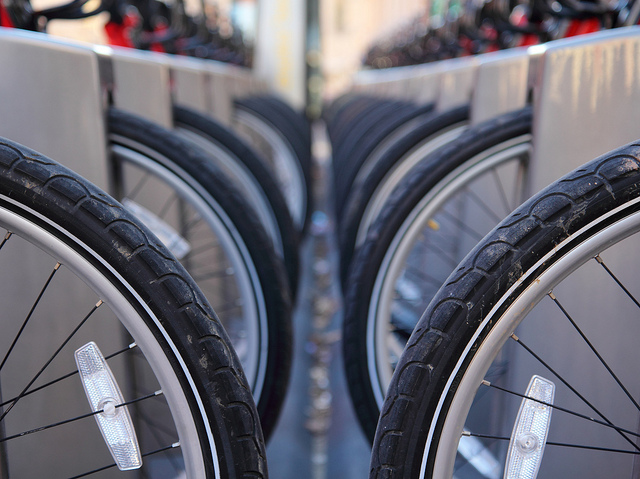
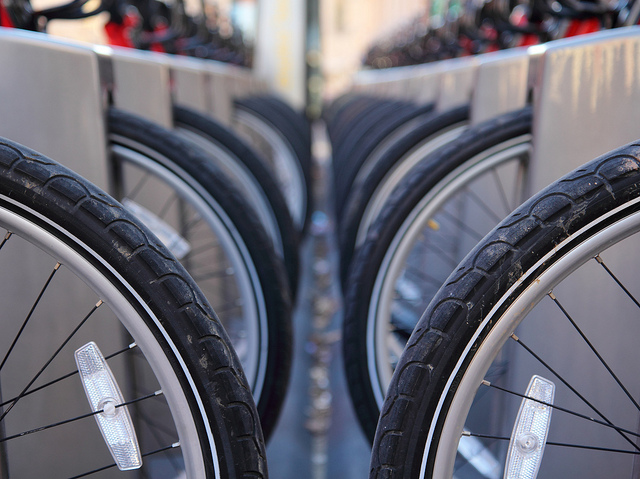 Photo by Mr. T in DC
By DCist contributor Tracey Ross
During the 2010 mayoral election, cycling became a racial issue as supporters of then D.C. Council Chair Vincent Gray criticized Mayor Adrian Fenty’s expansion of bike lanes as catering to the needs of affluent white residents over the city’s black population, particularly those facing high unemployment and struggling schools east of the Anacostia River.
Gray triumphed in the election, winning a reported 108 predominantly black census tracts, compared to Fenty’s 10. On the heels of his loss, one of Fenty’s last acts as mayor was to formally launch the Capital Bikeshare program, stating, “The only thing better than talking about biking is biking.”
Two years later, Capital Bikeshare’s ubiquitous red bikes are housed at over 175 stations (up from 114 when the program started) and are credited by some as sparking a more inclusive conversation around cycling. Veronica Davis, founder of Black Women Bike D.C., remembered hearing talk in 2010 discouraging cycling east of the river.
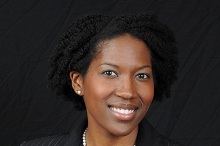 Veronica Davis
Davis, a resident of the Hillcrest neighborhood in Ward 7, recalled thinking, “What about people like me? What am I supposed to do?” When Capital Bikeshare stations opened in the area, she registered and quickly became an advocate of the program, knocking on neighbors’ doors and spreading the word about cycling.
The following year, Davis and two fellow cyclists launched Black Women Bike D.C. on Facebook, which quickly went from an online forum to a bike community that hosts monthly rides, helps women figure out what bike to buy and even connects new cyclists to commuting buddies.
“At the end of the day, our mission is to get women on bikes whether from there she does 100 miles or does one mile, I don’t really care. Just get on a bike,” she said.
Davis, who was recently honored by the White House as a Champion of Change for her efforts to expand transportation, now hears her older neighbors using the terms “walkable” and “bikeable” and has organized rides where women who haven’t bicycled in decades have hopped back on two wheels.
While Davis has become a strong voice in her community, she points to a “perfect storm” of activity among the larger bike community that has facilitated this shift in the biking conversation. Recently, the Washington Area Bicycle Association (WABA) created the East of the River Program, which, according to Davis “sparked that next level of conversation.”
Shane Farthing, WABA’s president, recalled looking at data that showed lower ridership east of the river, which he says is due in part to fewer riders—but also to the cycling community not being fully counted there. As a result, WABA decided to address these disparities and began mobile bike repair clinics—filling the void of bike shops in the area—and encouraging residents to dig bikes from out of their basements for basic repairs (each clinic has seen 40-75 bikes).
The organization has also been instrumental in hosting biking events in the area, including the recent Lion Ride it planned with community member Kellie Armstead at the Annual Frederick Douglass Family and Friends Festival, and this weekend’s St. Elizabeth’s East Bike Carnival.
“If you haven’t been on a bike in a while, group rides really make people feel more comfortable and secure about biking,” said Armstead.
WABA even hired an East of the River Program Manager this year to expand outreach efforts. “There’s no short cut to doing that, you actually have to be regularly riding and seeing people and talking to people on the street,” said Farthing.
The organization is now setting its sites on making sure that cycling becomes safer east of the river, in part by ensuring these communities aren’t left out of the city’s next Sustainability Plan and that “their voice is integrated into the regional biking voice” he said. “There are a lot of people who bike east of the river, and who deserve better biking accommodations.”
Not only is there an active cycling community east of the river, but riding is helping connect residents from other parts of the city to the area. As Capital Bikeshare, Black Women Bike and WABA’s programming was taking shape, bicycle enthusiast Mauricio Herbas, along with Mt. Vernon Square shop BicycleSPACE, started the weekly Hills of Anacostia Ride.
“My goal is to make people aware that it is safe over there to bike…and we don’t have to go very far to have a great work out,” said Herbas. “Just for the allure of seeing a totally different angle of the capital and all the monuments, I think it’s worth coming out just for that.”
While Capital Bikeshare helped change the culture of biking in the city, membership is still lower east of the river. However, the program aims to continue to expand its stations, and has participated in events by providing free bikes to residents. Most recently, the program mailed 35,000 residents in wards 7 and 8 a $25 discount to the program. Josh Moskowitz, Bikeshare Program Manager with the D.C. Department of Transportation, explained:
“For people to be able to see community leaders biking for work, biking for recreation, it’s great…it’s also great to have the infrastructure, and the infrastructure are those Capital Bikeshare stations and because we are a government transit program, we really want to make sure as many residents of the city can use the service as possible.”, he said.
Given what cycling and “bike lanes” meant only two years ago, the level of thoughtful and deliberate efforts to shift the dialogue in such a short time seem to be paying off.
“What all of this is doing—with WABA, with BicycleSPACE, with Black Women Bike—really what’s happening here is that we’re just helping reduce the barriers of biking in our own ways,” said Davis. As these groups continue to move forward with their complimentary efforts, we can expect to see an increase of residents from all over the city riding in those lanes.