Martin Austermuhle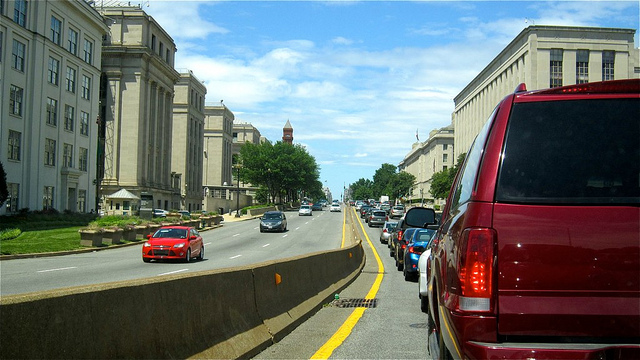
 August is a wonderful month in D.C. Residents and workers head out on vacation, otherwise popular restaurants and bars become a little less crowded and there’s simply less traffic to contend with. All of that ends next week, though, so be ready for plenty of more of the gridlock that has come to define our region.
Ahead of Tuesday’s return to normalcy, this week Transportation Planning Board of Metropolitan Washington Council of Governments quantified exactly how great the summer months can be for motorists and how awful September will feel by comparison. It reports:
Last year, the average daily delay per traveler on most of the major limited-access highways in the region dropped 18% at the beginning of summer—between June and July—from 25.1 minutes to 20.6 minutes, according to detailed traffic information collected by the Transportation Planning Board.
Average daily delay per traveler remained lower, around 20.4 minutes, in August, but jumped back up 26% in September to 25.8 minutes.
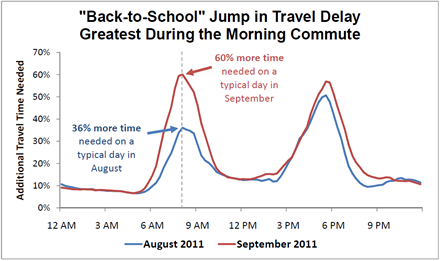
But more than that, the agency found what it calls the “back-to-school” bump: in essence, traffic gets way worse at very specific times in September than it was during the summer. According to the agency’s research, while getting from point A to point B in August would take 36 percent more time in rush-hour traffic than if they roads were totally clear, that spikes to 60 percent in September.
As the name implies, the spike is attributed to kids going back to school, but also a number of other factors that see more cars hit the road at the same times every day:
The arrival of September also means that people who enjoy the warmer, longer days of summer by making trips to outdoor sporting or recreational events, barbeques, or to museums, for example—trips which contribute to total VMT but typically occur mid-day or during extended daylight hours, outside of normal peak commute times—are less likely to do so.
Other factors like the return of Congress and its staff and the seasonal rhythms of work schedules also lead to more drivers trying to hit the road at around the same time each morning in September as compared to August, contributing further to the jump in overall delay.
So, there you have it. Try not to rage too much today thinking about how awful your commute will get next week.