Martin Austermuhle
When Uber first came to town late last year, it clashed with taxicab regulators who said that the livery service’s app-based business model didn’t comport with D.C. laws. But the service attracted a legion of followers—many of them sick of the city’s less-than-steller cab fleet—so much so that Uberites flooded the D.C. Council with angry emails when one legislator even dared propose an apparent compromise that Uber executives had originally seemed amendable to.
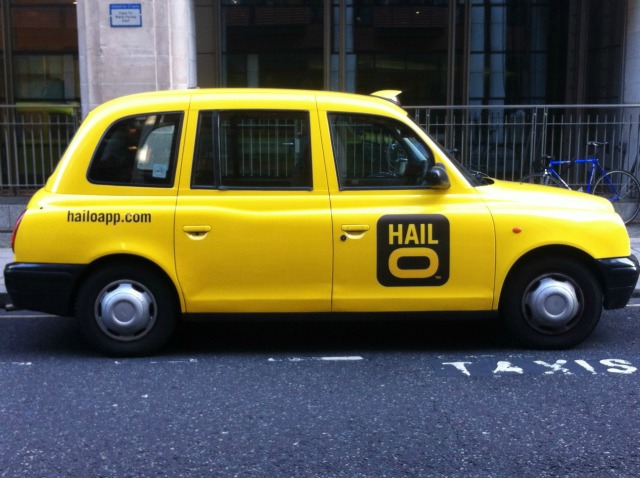
Uber is slowly gaining competitors in D.C., though, one of which—Limos.com— hopes to avoid Uber’s notoriety when it launches an app later this year. And now, Hailo, a similar app-based taxicab-hailing service, wants to bring its experience in European markets to D.C.—and it’s not looking to ruffle any regulators’ feathers in the process.
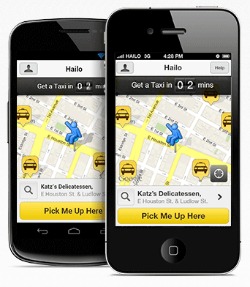
Hailo originated in London late last year, and currently works with 6,500 registered taxicab drivers—of a total fleet of over 23,000—and has more than 110,000 registered customers. Hailo’s app both allows a customer to hail a traditional cab as much as it helps drivers navigate traffic, better search out the hot spots for business and accept credit cards for payment.
According to Ron Zeghibe—Hailo’s chairman and one of the six original founders, three of which are cab drivers and three entrepreneurs—the company is looking at North America as the next frontier. Toronto, Chicago, New York, and Boston are already in the works, but Zeghibe added that D.C. is “clearly a market we seek to operate in.” The company recently posted a wanted ad for a D.C.-based general manager, and hopes to start serving D.C. riders and drivers by early 2013.
 So, how does Hailo differ from Uber? While Uber in part seeks to replace cabs with sedans and limos—which, given the frustration with taxicabs in D.C., hasn’t been hard—Hailo looks to more efficiently connect riders to licensed cabs.
“We’re about improving mass transit solutions,” said Zeghibe. “To be perfectly honest, the metered taxis actually represent a significant percentage”—close to one-third in New York, he said—”of the overall public transport in any major city.”
And while Uber has sold itself as being a classy alternative to D.C.’s somewhat shabby taxicabs—and charges a premium price for it—Zeghibe pitches Hailo as an option for the people. “We’re here to serve the 99 percent, not the one percent,” he said, drawing on the famous Occupy Wall Street slogan.
Part of that means starting more slowly, he said. In London, for one, Hailo started registering drivers and getting them the app for three months before any customers were brought in. That way, he said, when the app was released to the general public, there were already 1,000 cabs in the network.
Also, it means picking fewer fights. “Our approach is not confrontational,” said Zeghibe. “You need to work with the powers that be and certainly the way people operate and function and allow them to see for themselves why the new technologies serve them better.”
Of course, Uber isn’t sitting idly by and letting Hailo snatch up the taxicab market—which is much larger than limos and sedans—without a fight. This week Uber said it was launching a cab-hailing service in New York, a service it launched in Chicago in April. (Uber is also taking its service to Hailo’s hometown, having launched in London earlier this summer.)
And just as the D.C. Council was negotiating a possible detente between Uber and irate cabbies in July, Uber pulled the plug, saying it was worried that a proposed price floor on its service would prevent from launching a service for riders looking to pay less for a ride. (Emails to Uber representatives were not immediately returned.)
This is where Hailo’s approach—call it, “Ask permission first instead of asking for forgiveness later”—comes in. As Uber fights regulators to approve a business model it already has in place, Hailo meets with them to let them know what it has in mind. Zeghibe said that in April he met both with D.C. Taxicab Commissioner Ron Linton and staffers in Councilmember Mary Cheh’s (D-Ward 3) office, laying early groundwork for the service’s launch in D.C.
“We talk go and talk to the regulators in advance to make sure that they’re comfortable that what we’re doing is within their rules, and we were told, for example, in Washington to be specific, that we were,” he said. It took weeks after Uber launched until company representatives and Linton similarly sat down for a meeting.
Beyond asking nicely, Hailo provides a distinctly different service to Uber’s. While Uber’s charges stem from its GPS-based app, Hailo uses the cab’s existing meter. The app merely connects drivers and riders, keeping it away from the biggest problem D.C. regulators have had with Uber—that it seems to charge for time-and-distance without the required meter. (In London, drivers pay a fee for the app and to be part of the network; in D.C. a small charge might fall on riders instead.)
Linton called Hailo’s model that of a “dispatch operator,” which is perfectly within the city’s regulations. Moreover, he added, the commission welcomes the idea.
“The commission, at this moment, has no intention of putting itself into the dispatch business. We think that’s private enterprises’ responsibility. We also believe that there are rapid changes coming through electronic developments that are going to change, dramatically, the way people can get vehicles for hire. Our intent is to leave that field open to competition,” he said.
As for Uber, he said, the commission is working on regulations for sedan-style cars, the very ones that Uber has done so well with. On Monday, September 10 the commission will hold a public informational meeting on the regulations, and on Wednesday, September 19 it will meet in special session to debate them.
UPDATE, 3 p.m.: As some commenters have noted, another similar service already exists in D.C.: TaxiMagic. If anyone has used it and has good or bad experiences, please email me.