Martin Austermuhle
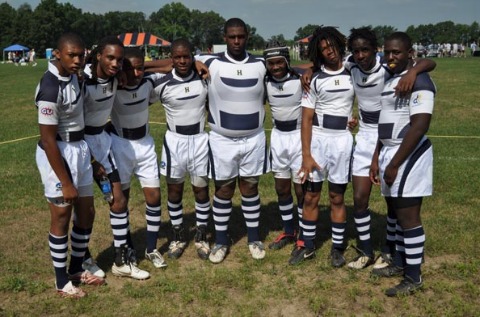 Members of Perry Street Prep’s—then known as Hyde—rugby team in 2010.
Hollywood loves movies about unlikely athletes that overcome the odds to win the big game, even more so if they learn valuable life lessons in the process. Think Rudy, Hoosiers or Remember the Titans.
So it’s no surprise that a California screenwriter is shopping around a script in Hollywood based on a D.C. charter school’s championship-winning rugby team, while a New York filmmaker is putting the final touches on a feature-length documentary on the team’s unexpected—and inspiring—story.
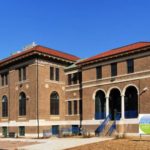
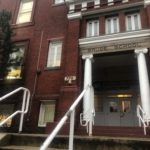
Perry Street Prep School is a charter school located in Ward 5, and despite its tiny student body is home to a virtually unrivaled rugby team. Started in 2000 by Tal Bayer, a former rugby player and once-frontman of the ska band The Pietasters, Perry Street’s rugby team—formerly known by the school’s old name, Hyde—has racked up wins and seen players join the ranks of the U.S. national team.
In 2004, the team reached the U.S. national high school rugby championships in Dallas, Tex. And last year, the all-black team—the first of it’s kind in the U.S.—defeated rugby powerhouse Gonzaga in the Metro Area Varsity Rugby Conference championship game, no small feat given the larger student body and resources that its Catholic competitor had to draw upon.
The team’s story has drawn national and international media attention, and it could now be headed for the silver screen. Screenwriter Kevin Michael Smith, who co-wrote 2007’s Pride, a movie about an inner-city Philadelphia swim team, wrote a script based on the team last year, and it is now being shopped around by a team of producers whose past work includes Oscar-nominated Ray.
“It’s really an inspiring story,” said Lou DiGiaimo, one of the hopeful producers of the movie, titled My Brother’s Keeper. Tipped off to the team by a documentary filmmaker who had herself read a 2008 New York Times article about it, DiGiaimo told us that it didn’t take much to convince to take on the project.
“I was sold the minute I read it. It was a small piece and didn’t tell the whole story. Once I spoke with Tal and he told me about P.J., I knew we had the storyline to make into a movie,” he said, referring to P.J. Komongnan, one of Perry Street’s most well-known—and unlikely—players.
The way Bayer tells it, Komongnan got his start in rugby by standing on the sidelines throwing glass at the team as it practiced. Bayer walked over, handed him a ball and watched in disbelief as Komongnan—”scrawny and snot-nosed,” said Bayer—proceeded to run straight through a line of 15 players. And then he did it two more times. Though it wasn’t an easy transition, Komongnan eventually rose to play for the under-19 U.S. national team and national Sevens team, taking part in matches abroad against feared international competitors.
The team’s story is also being told by Jonni Masella, a New York-based filmmaker who is wrapping up a feature-length documentary, Touch, Pause, Engage. (A short version was screened at the 2011 Our City Film Festival.) “The story is phenomenal. It’s really inspiring,” she said in a recent interview.
Filmed during the 2008-2009 season, Masella said she was taken by the way rugby was able to provide support and direction for many of the team’s players. She also said that the sport accurately represents the world around it. “Everyone plays, it’s continuous, there are no stars, and there’s a role for everyone,” she said. “It gives kids in it the perspective and outward belief to be able to redirect their lives.”
Masella hopes to have the documentary wrapped up in a month, after which she’ll send it around to a number of film festivals. She plans on giving 50 percent of the documentary’s proceeds back to the school.
Bayer admits that he’s excited for the two projects, mostly because they can help highlight the program and the successes of his players, which have grown to include a middle school team, girls team and alumni team. Still, he told us, he was initially apprehensive about how the team’s story and his role would be framed, and wanted to make sure that the movie balanced the good and the bad.
“You have to balance the drama, the negativity you go through, with humor. I hope that comes across. That was one of the big things I wanted to make sure included, was the happiness, the fun and the joy, despite all the BS that goes on,” he said.