Martin Austermuhle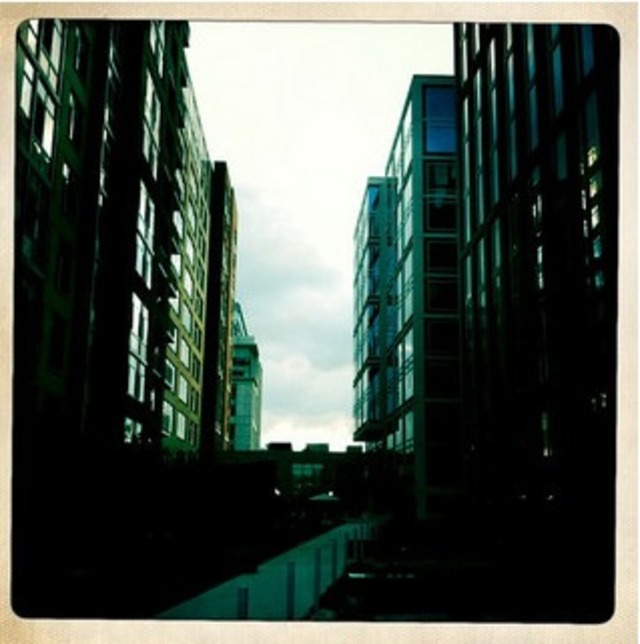
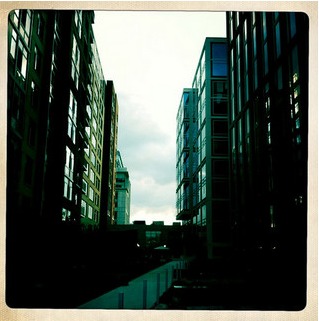 Photo by jim_malone
By DCist contributor Tracey Ross
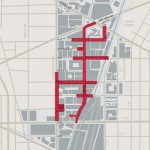
Over the past few months, NoMa—the neighborhood that serves as a gateway between Northwest and Northeast D.C., extending from Massachusetts Avenue to R street—has garnered several wins: from the opening of Union Market to the naming of the NoMa-Gallaudet U Metro station to the recent announcement that the city is dedicating nearly half a million dollars to developing parks in the area.
While the neighborhood continues to grow, and the NoMa name catches on, it was just one year ago that the Post declared that the neighborhood was “searching for its identity,” an allegation NoMa BID President Robin-Eve Jasper finds puzzling. “NoMa is what it is,” she said. “[NoMa] is at some level a neighborhood that’s anchored by the Capitol and Union Station, and graced by wonderful established rowhouse communities around it.”
At the beginning of the 20th century, the area was primarily industrial land linked closely to the construction of Union Station. In the decades following the D.C. riots, there was very little development in general east of 14th Street NW. Jasper credits projects such as the Verizon Center for taking risks and expanding development eastward.
In the early 1990s, a large planning effort created new zoning for mixed-use development north of Massachusetts Avenue, ushering in a new phase for a neighborhood carved out by train tracks. “NoMa isn’t really a place between, it really was just property that [is] centrally located with zoning for dense development that makes it ultimately the eastern edge of kind of the urban core,” she explained.
Much of the story of NoMa’s emergence is credited to the private sector players who mostly occupy the area. “The investors here are primarily smart institutional investors who are uniquely collaborative,” said Jasper. “You have a group of people who come together and see themselves as collaborators as they do competitors, and they get together and do things that are kind of unusual.” Her prime example was the very Metro station that now bears the neighborhood’s name, which was funded in large part by the private institutions there, and has been studied as an example of public-private partnerships.
Those institutions also came together to form the NoMa BID, a business improvement district formally created by the City Council and approved by Mayor Anthony Williams in 2007. The BID collects a special assessment from property owners and in turn promotes the neighborhood, advances projects, and coordinates public and private services among other efforts.
It is also working to reinforce the neighborhood’s east-west connectivity and tout its place as a transportation hub, while focusing on a number of beautification projects to make it a destination spot. “What we’re seeing now is a wave of development in the neighborhood that is oriented towards the public realm,” said Jasper.
One of the largest projects going on is a new LEED Platinum office building, Three Constitution Square, linked to the NoMa Metro and set to open next year. There are also ongoing plans to transform the neighborhood’s bus station for mixed use development (though details are in the works), along with a public plaza.
In the midst of all the development, the NoMa BID also works to connect with residents and employees in the area through summer film screenings and lunch concerts, as well as upcoming events, such as the Fall Festival and Market. More businesses catering to residents in the area are also moving in, most recently Petco’s dog store Unleashed.
While NoMa may not be searching for its identity, it has been going through so much development over the past decade that its seemingly emergent nature certainly affects how people see the neighborhood. However, many people continue to flock to the area to work, live, and experience some of the new amenities.
Despite the rising office buildings and large cranes, up to 800 people flocked to the neighborhood’s summer film screenings, and according to the BID website, “more than 1,200 residences opened in 2010, and over 1,500 new apartments are currently under construction.”
It seems that people are accepting that NoMa is what it is.