Martin Austermuhle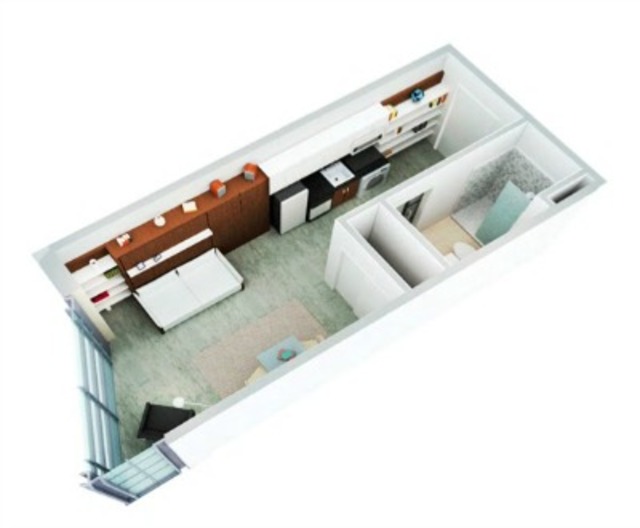
 One of the proposed micro-units. Rendering by Hoffman-Madison Waterfont.
Your apartment or condo might feel small and cluttered, but it may well be mansion-esque compared to what’s coming to D.C.
DCmud writes that The Wharf, shorthand for the massive new retail and residential complex that will pop up where the dilapidated Southwest Waterfront currently stands, will feature some of the city’s first “micro-units,” apartments measuring between 330 and 380 square feet:
The micro-units could be the first in a new development for the District. Another developer planned some for Chinatown, but those were never built. In July, 60 percent of respondents to a survey by UrbanTurf said they would consider living in a 275 to 300 square foot apartment. And with a trend in micro-unit housing sweeping the country thanks in part to a smaller-is-better way of viewing housing, it was only a matter of time before über-small apartments arrived in D.C. In July, New York City mayor Michael Bloomberg announced a design competition to design 300 square foot apartments.
Developers say that more and more young residents are shunning cars and furniture, leaving open a market for smaller units that have built-in furniture and cabinetry. Additionally, The Wharf is being developed so that residents wouldn’t need to go far for most of the usual amenities residents like. Of course, micro-units have also attracted criticism from people who say that they aren’t family friendly and will limit city living to young singles with plenty of disposable income. Writes GreenSource:
A more legitimate concern is that the current crop of micro-units aren’t exactly affordable housing, just, in Shortt’s view, another way for the creative class to enjoy city centers. Traditionally, young innovators have moved to urban edges, where they have helped depressed neighborhoods rise. By creating micro-units in places like New York’s Kips Bay and San Francisco’s SoMa, the cities may be doing nothing more than increasing the concentration of the privileged in already-desirable enclaves—not the most enlightened urban planning goal.
Of the 500 residential units planned for the development’s Parcel 2, some 40 percent will be micro-units.