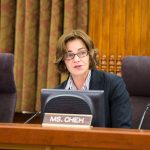
 A day after finishing a week-long diet in which she attempted to eat no more than $30 worth of groceries, D.C. Councilmember Mary Cheh (D-Ward 3) sponsored a resolution bemoaning planned federal cuts to food stamp programs.
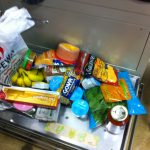
Last week, Cheh joined a group of anti-hunger activists in attempting the “Food Stamp Challenge” as a way to raise awareness toward the hardships faced by those who receive benefits from the Supplemental Nutrition Assistance Program, also known as SNAP. Participants in the challenge were limited to $30, or roughly the average weekly benefit received by the 142,000 District residents enrolled in SNAP. (Cheh was particularly concerned about being cut off from her usual supply of cupcakes.)
The resolution introduced today would offer an official complaint against agriculture bills passed by the U.S. Senate and House of Representatives that would make deep cuts to SNAP benefits, which are federally funded and locally administered. A Senate agriculture bill passed in June would reduce national SNAP funding by $4.5 billion over 10 years; a measure passed in July by the House Agriculture Committee would cut $16 billion over the next decade. (The full House will not deliberate the farm bill until after the general election on November 6.)
Both versions of the farm bill would also make cuts to the so-called “Heat and Eat” program, which provides SNAP households with a nominal benefit from the Low Income Home Energy Assistance Program. An attempt to remove the “Heat and Eat” cut from the Senate bill was defeated nearly the entire Republican caucus and 22 Democrats.
Cheh’s resolution states that the House farm bill could potentially reduce access for the 45,000 children in D.C. receiving SNAP benefits. “It is the sense of the Council to urge the U.S. House of Representatives and U.S. Senate to strengthen, not weaken, our nation’s nutrition safety net,” the resolution reads.
Sense of the Council on Support for the SNAP Program Resolution of 2012