Martin Austermuhle
 Pharmacy, or grocery store?
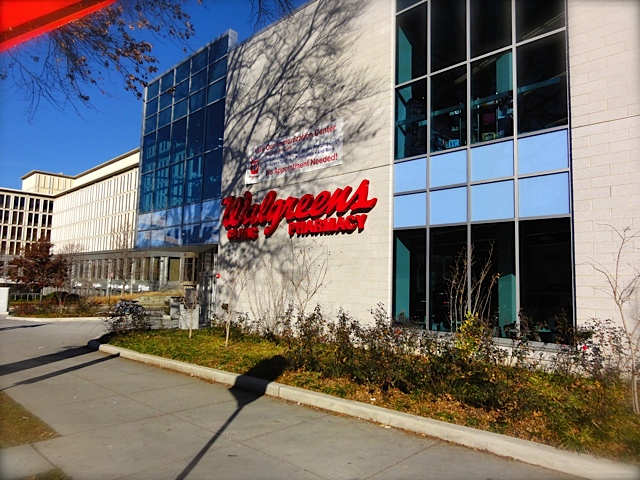
The Walgreens that sits across from the UDC campus in Van Ness is massive: it has over 20,000 square feet of retail spread out on two floors, and sells everything from basic food items to your usual medicines. But does it sell enough food to qualify as a grocery store? That question is at the center of a debate over whether or not the drug store—grocery store?—should be able to sell alcohol or not.
The store opened its doors a year ago, and has since been trying to secure itself a Class B liquor license, which allows corner stores, convenience stores and grocery stores to sell beer and wine. The only problem? There’s a moratorium on the issuance of such licenses, likely leaving Walgreens high and dry.
But where there’s a will, there’s likely a way—and an exception to the law. As a means to attract grocery stores to the city, in 2000 the D.C. Council carved out an exception to the moratorium for “full service grocery store[s]” that sell “a full range of fresh, canned, and frozen items.” It worked: Whole Foods was lured to its site on P Street in part because it would be allowed to sell alcohol.
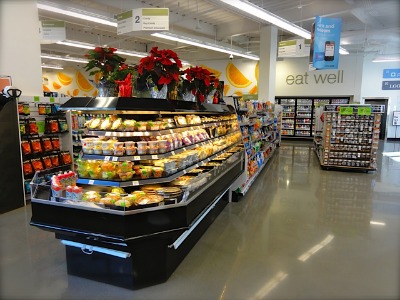 Walgreens sells food, but does it sell enough to qualify as a grocery store?
Of course, Walgreens doesn’t strike many people as a grocery store. Still, amid protests from some neighbors (and a nearby Giant) over the possibility that the retailer might eventually sell alcohol, the national chain asked the Alcoholic Beverage Control Board to rule on whether it could qualify for the exception.
In an August 1 finding, the board said that Walgreens only carried 55 fresh products and only dedicated 1,700 square feet of its space to the sale of food, meaning that on first look, it probably wouldn’t qualify. But, it added, there was nothing stopping it from selling more food. In fact, the board opined, if it dedicated more shelf space to food than it did to non-food items, it would certainly meet the grocery store standard.
The board didn’t stop there, though. It added that if more and more supermarkets (which can sell alcohol) are jumping into the pharmacy game, why can’t more and more pharmacies jump into selling food, and, as a fringe benefit, alcohol?
[T]he differences between pharmacies selling groceries, like the licensee, and grocery stores, like Safeway, operating pharmacies is rapidly shrinking—if not disappearing altogether. Therefore, given a push by retailers towards one-stop shopping, we question whether retailers commonly considered by consumers to be grocery stores should meet a strict interpretation of this test.
Given the somewhat novel interpretation of the law and the far-reaching impact it could have, the board opted to hold another pair of hearings on the issue, which it did yesterday and on Wednesday. Councilmember Mary Cheh (D-Ward 3) testified yesterday, arguing that the board was wrong in even thinking that a traditional pharmacy could become a grocery store only by selling a few more food products.
“Yes, Walgreens does sell a range of food products. Its stores have coolers and freezers and do sell perishable goods. However, because only a small portion of Walgreens’ gross sales is from food; only 8.5 percent of the store’s retail floor space is used to display food items; and food items comprise a small percentage of the total number of items available for sale at the Walgreens store, it seems clear to me that the store’s ‘primary business and purpose’ is not ‘the sale of a full range of fresh, canned, and frozen food items,'” she said, according to written testimony.
Cheh isn’t stopping there, though: last week she floated an amendment to a liquor law rewrite that would mandate that grocery stores make at least 40 percent of their revenue from the sale of food. While the amendement was tabled, she said that she would bring it up again next week at the council’s last legislative session.