Martin Austermuhle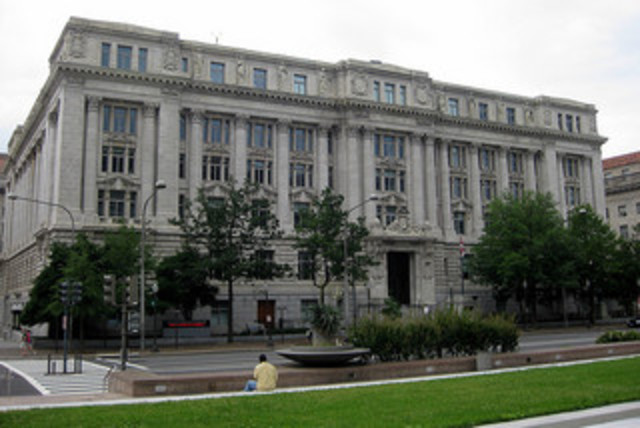
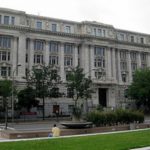
 Photo by wallyg
The D.C. Council debated, discussed and deliberated for over 12 hours yesterday, taking action on some 80 bills that had to rushed through the legislature before the end of the session in two weeks. Below we summarize some of the more noteworthy legislative measures that passed muster; many are subject to a second and final vote on December 18 and will have to be funded.
>> Uber is legal! Uber is legal! Now let’s hope this is the last time our august legislative body discusses the high-end livery service.
>> Despite opposition from Mayor Vince Gray, the Council adopted a resolution authorizing a referendum on expanded D.C. budget autonomy. The referendum will coincide with the April 23, 2013 At-Large special election.
>> The Council unanimously passed a bill that would lower most speed camera fines by $50. Under the provisions of the bill, written by Councilmembers Tommy Wells (D-Ward 6) and Mary Cheh (D-Ward 3), speeding between 11-15 miles an hour over will get you a $75 ticket, down from $125. Between 16-20 mph over will be $100 (down from $150), while 21-25 over will be $150 (down from $200). The fine for speeding 25 mph over will remain at $250. A new portion of the bill would also drop the fine for turning right on red from $100 to $50. Don’t get too attached to the new fines, which will likely go into effect in April, though: the $95 million four-year price tag means that legislators will have to find money to pay for the changes after the first year.
>> At some point next year, you might notice an additional 30 cents a month tacked onto your water bill. The new fee was passed in order to create a $1 million fund to pay for damages caused by sewage backups into homes in certain neighborhoods during heavy rains. (Bloomingdale and LeDroit Park are most commonly cited, though any resident would qualify.) The fee will likely be offset by a $4.2 million D.C. Water surplus that the utility has agreed to return to customers in the form of a rebate starting in January.
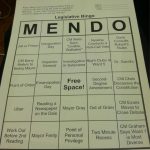
>> Yesterday we told you about the battles between Council Chair Phil Mendelson and Councilmember Marion Barry (D-Ward 8) over a pair of competing bills that would grant protections to ex-convicts as they search for housing and employment. Mendelson’s bill—which limits liability for employers and landlords that don’t hire or rent to ex-cons, creates certificates of good standing for the returning citizens and helps them seal their criminal records more quickly—won the day, though not without substantial and vibrant dissent from Barry, both in person and on Twitter. He accused Mendelson of enshrining discrimination against ex-cons into law and ruling over the legislature with an iron fist.
>> The troubled red-top parking meter program is no more. The parking meters—which would set aside 10 percent of all on-street parking spots for handicapped drivers and make them pay for the parking—failed on a 6-6 tie vote, meaning that for the time being the status quo rules for disabled drivers. Legislators argued over the extent of fraudulent use of the handicapped placards, especially among out-of-state drivers, but couldn’t bring themselves to start charging for parking that is currently free.
>> Despite opposition from the D.C. CFO, the Council approved an $11 million tax abatement for the Howard Town Center, a new mixed-use development on Georgia Avenue just north of Florida Avenue NW. Gray and a number of councilmembers questioned why a project in such a prime location would need help from the city, but pleas from Councilmembers Jim Graham (D-Ward 1) and Jack Evans (D-Ward 2) won out the day.
>> Evans pushed through a measure that would expand operating hours for the city’s neighborhood libraries. While the current operating hours are staggered, Evans’ bill would see all neighborhood libraries open from 9 a.m. to 9 p.m. Monday through Thursday, 9 a.m. to 5:30 p.m. on Friday and Saturday, and noon to 5 p.m. on Sunday.
>> Much like many states across the country, D.C. legislators approved a bill making synthetic marijuana, bath salts and other such chemically produced drugs illegal.
>> A proposal by Mendelson to scrap the requirement that petition circulators for political campaigns be D.C. residents was shelved. Despite Mendelson’s insistence that a lawsuit against D.C. for its residency requirements would likely come out against the city, various councilmembers expressed discomfort with the idea of letting non-residents gather signatures to put candidates on the ballot.
>> Controversial D.C. Public Charter School Board member Don Soifer was reappointed to another term, a few weeks after an article that he co-authored criticizing multicultural education surfaced and provoked consternation among various legislators. While Wells and Graham said that they didn’t think that his ideological leanings fit with the city’s public education goals, Councilmember Kenyan McDuffie (D-Ward 5) said that Soifer’s tenure on the board and his work outside of it should not be conflated.