Martin Austermuhle
The year 2012 won’t be remembered for its snow. That’s mostly because there really wasn’t much of this stuff: by late February, we had only gotten some two inches of snow, putting us second-to-last in a ranking of 25 U.S. cities and the amount of snow they received during the 2011-2011 winter.
What 2012 will be remembered for will be records and wind, though. In terms of records, well, we set plenty of them: we had the mildest winter on record, followed by one of the warmest springs. (Remember when it was in the 70s in March?) During the summer, we had the hottest day in 142 years (104 degrees, to be exact) and the longest streak of days above 95 degrees. July 2012, for one, was ranked the second-hottest July on record. Just how hot was it? So hot that D.C. was among the hottest places in the entire country on a June day, and so hot that a portion of track along Metro’s Green Line warped because of the searing temperatures. (The phenomenon has a name: “heat kink.”)
The summertime records also included rainfall. This year may not have been the wettest we’ve experienced, but it did see some very strong thunderstorms, many of which overwhelmed infrastructure and led to flooding in parts of Bloomingdale and LeDroit Park.
It was also pretty damn windy. Not only did we have a tornado scare in June, but we were also nailed by the weather phenom known as derecho later that month. The derecho was serious business, too: close to 500,000 Pepco customers were left without power in the wake of the sudden storm, and it took the utility over a week to fully restore electricity across the region. (Mayor Vince Gray was among those that lost power.)
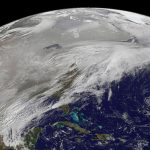
That wasn’t all, of course. Though we were spared the worst of it, we also suffered from Hurricane Sandy, the late-October frankenstorm that battered the East Coast and could have produced serious local flooding had it tracked only a few miles further south.
Some people insist that these freakish weather patterns are the product of global warming, while others say that they are merely part of natural cycles. Either way, we could all stand to have fewer records and maybe a little less wind come 2013, huh?