 Photo by Clydeorama
Hey guys, can you feel that underwhelming sense of skeptical excitement in the air? Yes, that’s right: the NHL lockout is (almost certainly) over. After scratching over half of the 2012-2013 season—625 games to be exact—the National Hockey League’s team owners and its Players Association finally came to terms on a new collective bargaining agreement about 5 a.m. on Sunday morning, averting what could have been the league’s second canceled season in eight years. Both sides’ lawyers will draft an agreement in the next several days, and games could begin as soon as January 15.
“Don Fehr [director of the NHLPA] and I are here to tell you that we have reached an agreement on the framework of a new Collective Bargaining Agreement, the details of which need to be put to paper,” NHL Commissioner Gary Bettman said. “We have to dot a lot of i’s and cross a lot of t’s. There is still a lot of work to be done, but the basic framework has been agreed upon.”
The agreement—reached at the end of a 16-hour long, last-gasp negotiation session—saw both parties make concessions, but the owners came away with a larger slice of the pie. They’ll receive a 50-50 split of hockey-related revenue from here on out, up from 43 percent in the previous collective bargaining agreement. Using 2012 numbers, this puts an additional $231 million a year in their pockets; extend that out over the course of the 10-year long agreement, and they’ll be $2 billion dollars richer for their troubles.
There are other significant changes to the CBA as well. The salary cap for the upcoming season will be $70.2 million this year and will decrease to $64.3 million in the 2013-14 season; the league had wanted next season’s cap decreased to $60 million, but conceded to the higher figure in the end. The salary floor was also adjusted for the 2013-14 season; clubs will have a minimum payroll of $44 million. Contract-wise, a player’s salary will now be unable to vary more than 35 percent year to year, and the final year of the agreement won’t be able to be more than 50 percent of it’s highest year.
So, in short, the owners were the winners here. The players may have limited the damage, but at the end of the day their revenue stream is smaller and their contract rights are more limited. The real losers, however, continue to be the fans. Subjected to a work stoppage for the third time in less than 20 years, it remains to be seen how many of them will take their anger out at the ticket window. Under those three lockouts—all during Bettman’s tenure—the league cancelled 2,178 regular season games. One senses that your average NHL fan won’t have a lot of sympathy for either side, particularly during the trying economic times we live in.
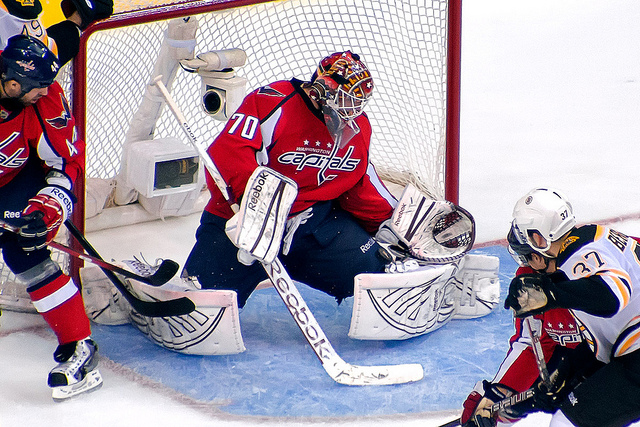
The Capitals themselves have surely suffered, relatively at least. Though many on the team have been playing abroad, their players lost 40 percent of their wages. The NHL’s owners fared even worse during the lockout, losing an estimated $8 to $10 million a day in revenue. And there have been other, more important effects: businesses around the Verizon Center saw their profits dwindle, and the city itself lost an undetermined amount of money via lower Metro ridership and sales tax revenue.
So what’s next? As mentioned, a shortened 48- or 50- game season should be underway in the next two weeks. There’s been talk that the schedule will be modified to an inter-conference format to maximize the shortened timetable. The idea of allowing two additional teams from each conference into the playoffs has been batted around as well, a move likely to entice a few apathetic fans back into their seats.
At the end of the day, though, it’s difficult not to be a bit underwhelmed by the new of this agreement. While I’m happy to see hockey return to the Verizon Center (keep in mind that the arena’s only other tenant this right now are the 4-29 Wizards), the NHL has a long way to go to get its fans excited for hockey again. Yes, it’s going to take much more than the “Thank You Fans!” that the league painted on the ice after the ’04-’05 lockout. Maybe something along the lines of lower ticket prices? Or free whiskey?
Or if those things aren’t your bag, you can just watch this video of Alex Ovechkin doing an Eastern Motors advertisement over and over again, and maybe you’ll forget any of this nonsense ever happened.